Extinction


Today in APD


Recent extinctions


Time-to-extinction


Extinction risk


Allee efffects

Extinction

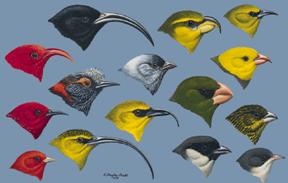
  • Humans are causing the 6th mass extinction event.
  • At least 1000 species have gone extinct over past 500 years.
  • Extinction rate appears to be 100-1000 times higher than during the past 25 million years before humans.
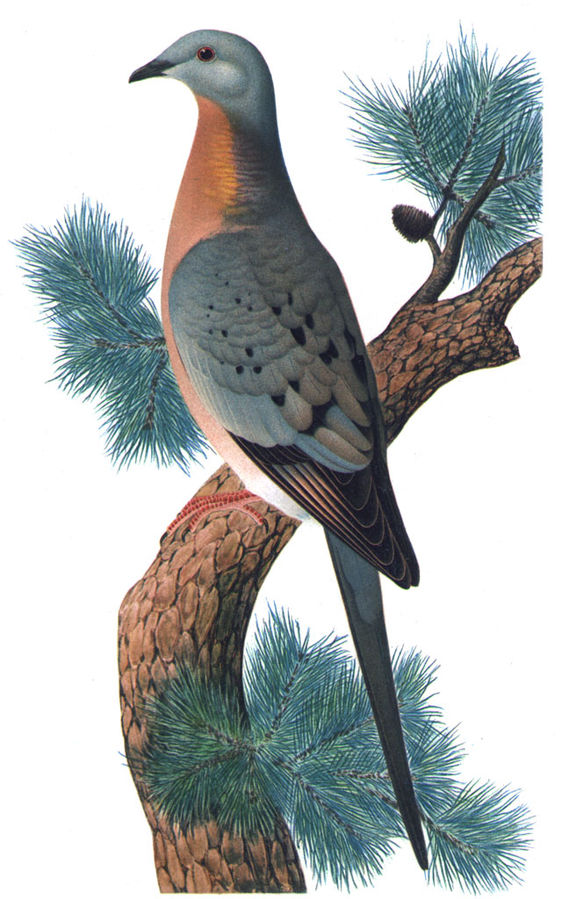
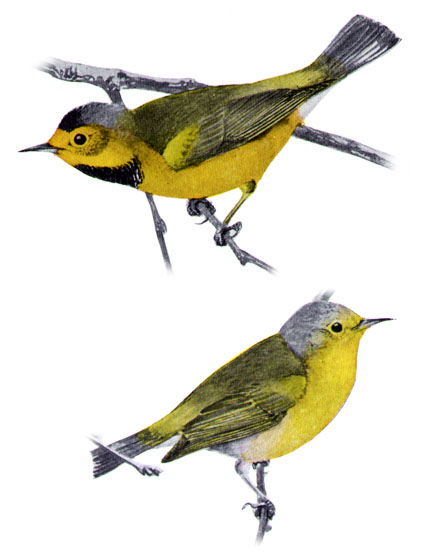
  • Almost 200 bird species have gone extinct since 1500.
  • Avian extinctions in GA: passenger pigeon, Bachman’s warbler, ivory-billed woodpecker, Carolina parakeet.

Time to extinction (Te)

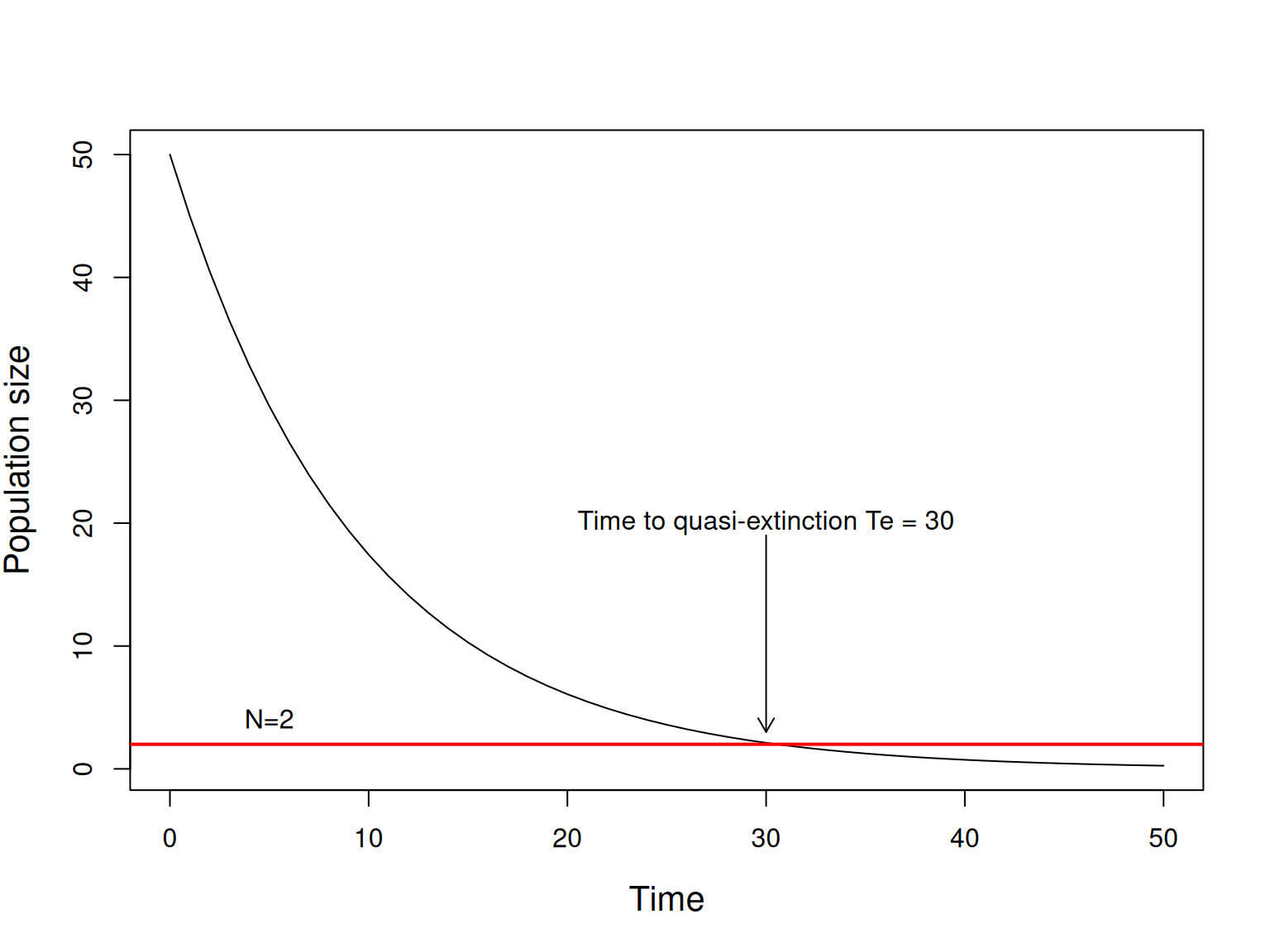
For a deterministic model, time to extinction can be calculated easily.


But how should we define extinction?


Time to quasi-extinction (\(T_e\)) is the time it takes for a population to reach an extinction threshold beyond which it is doomed.


Threshold is usually based on genetic considerations, Allee effects, …

Geometric growth example

Extinction risk

For stochastic models, we are interested in extinction risk.


Extinction risk is the probability that a species goes extinct in some time period.


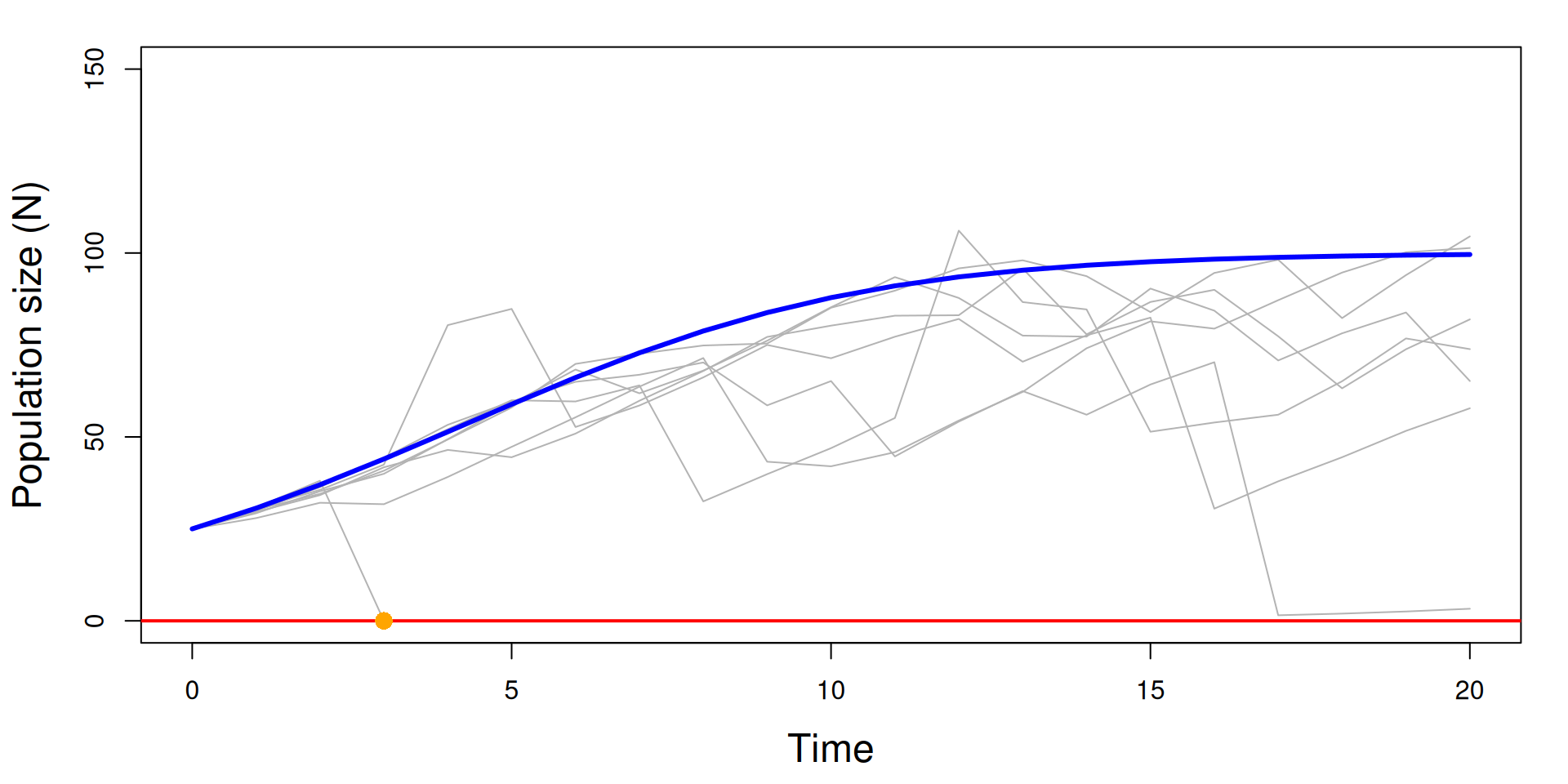
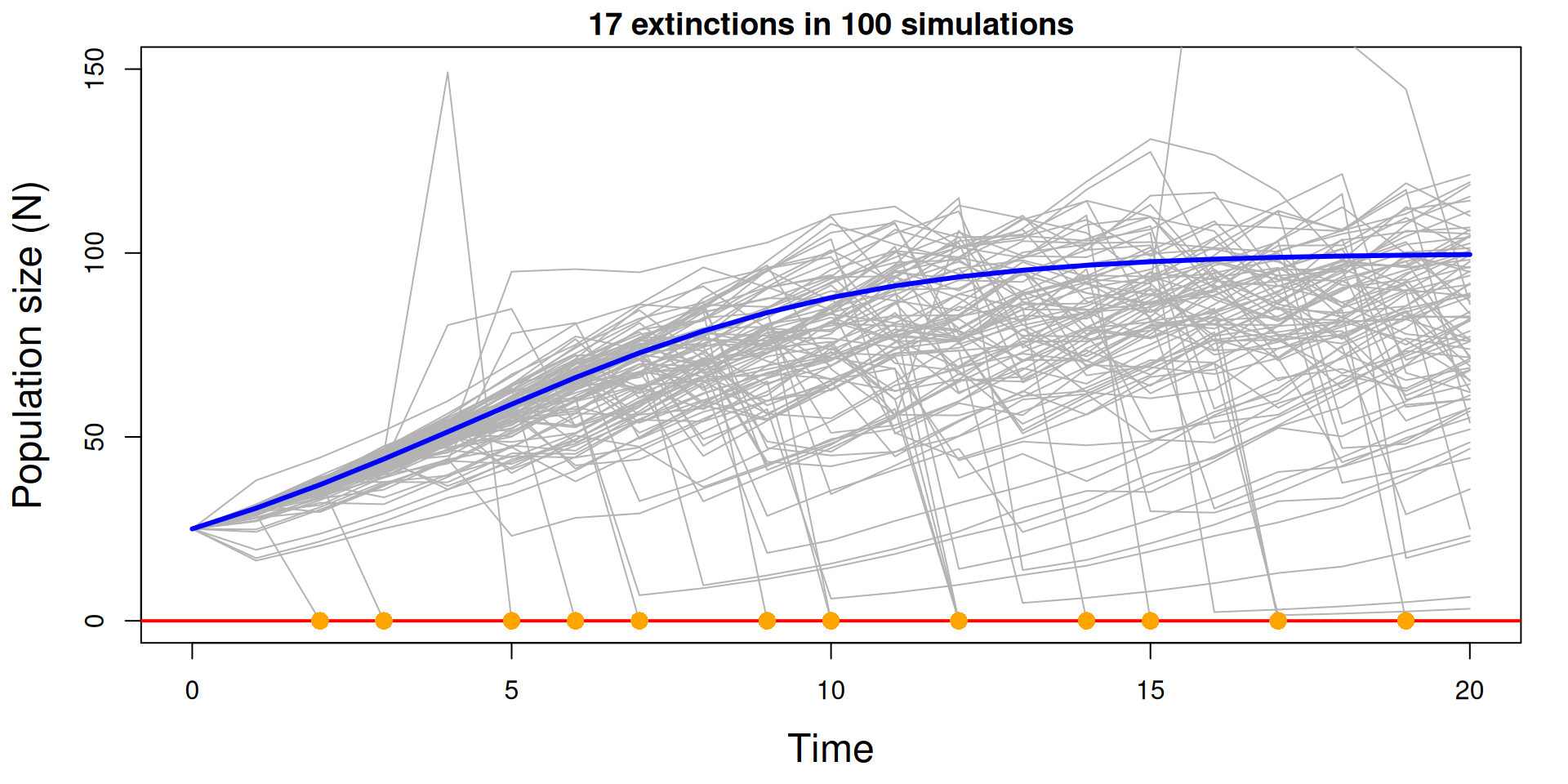
Extinction risk can be calculated as the proportion of simulations in which the population goes extinct.


Calculating extinction risk requires a specification of the time horizon of interest.

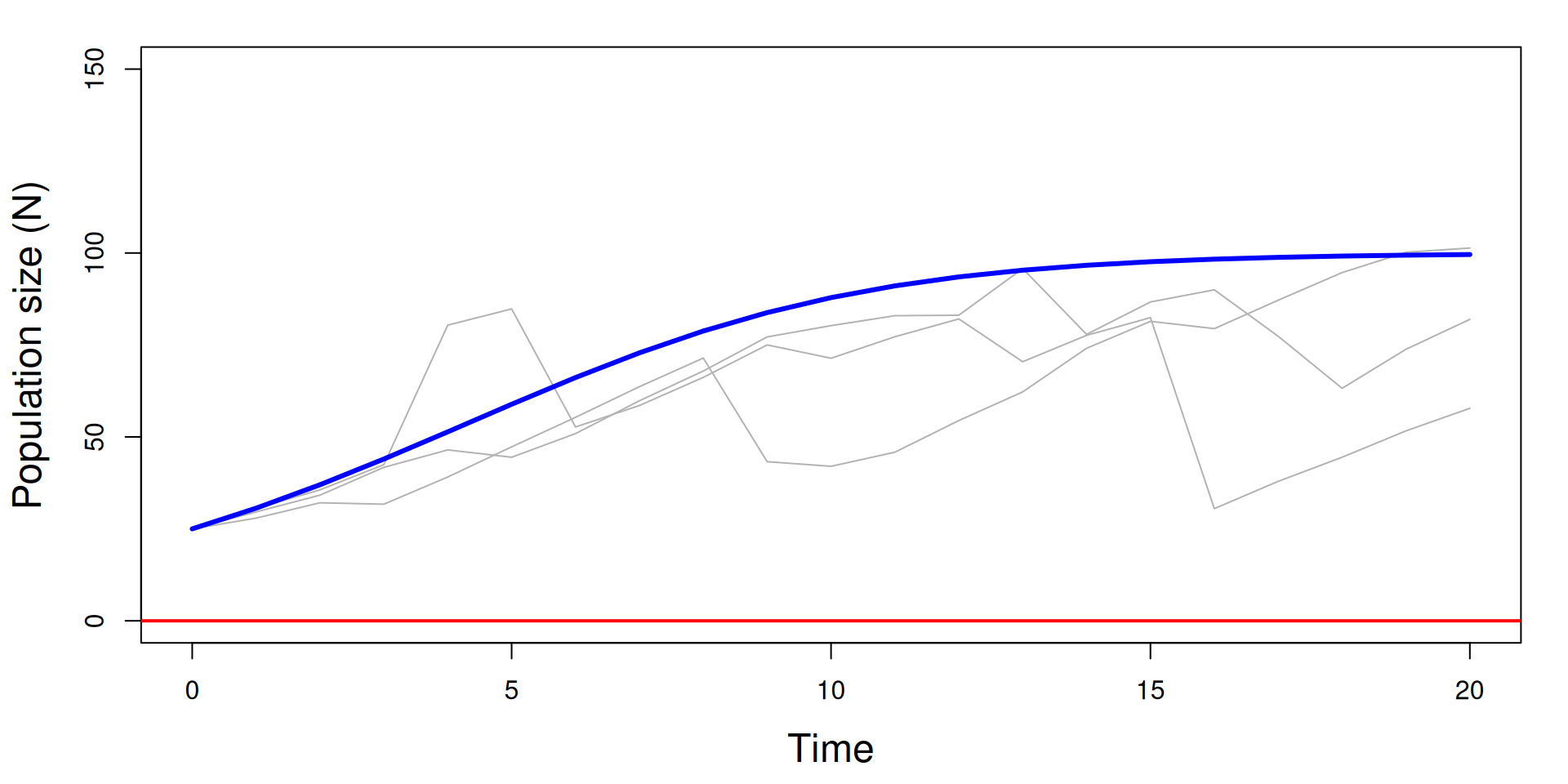
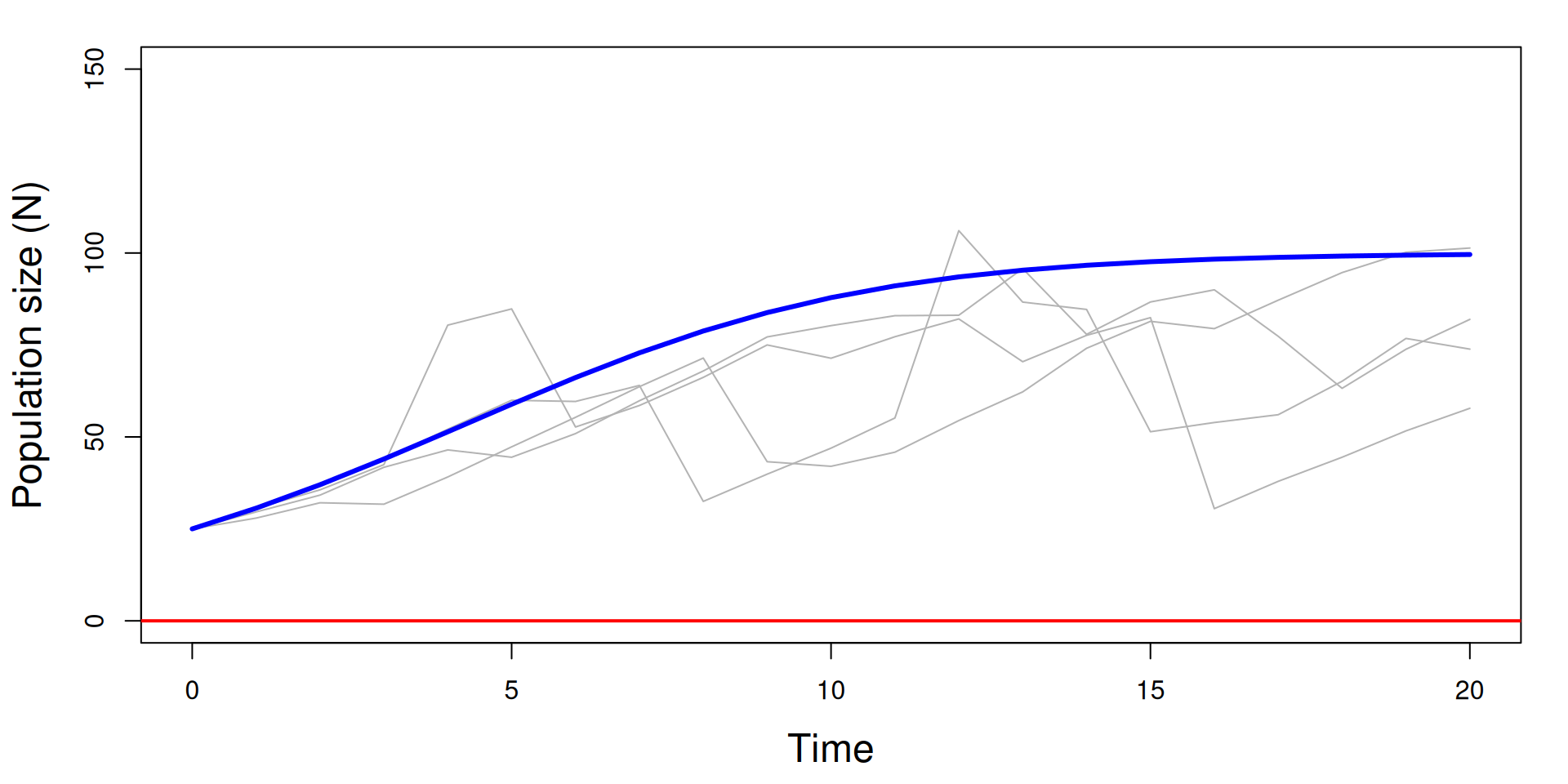
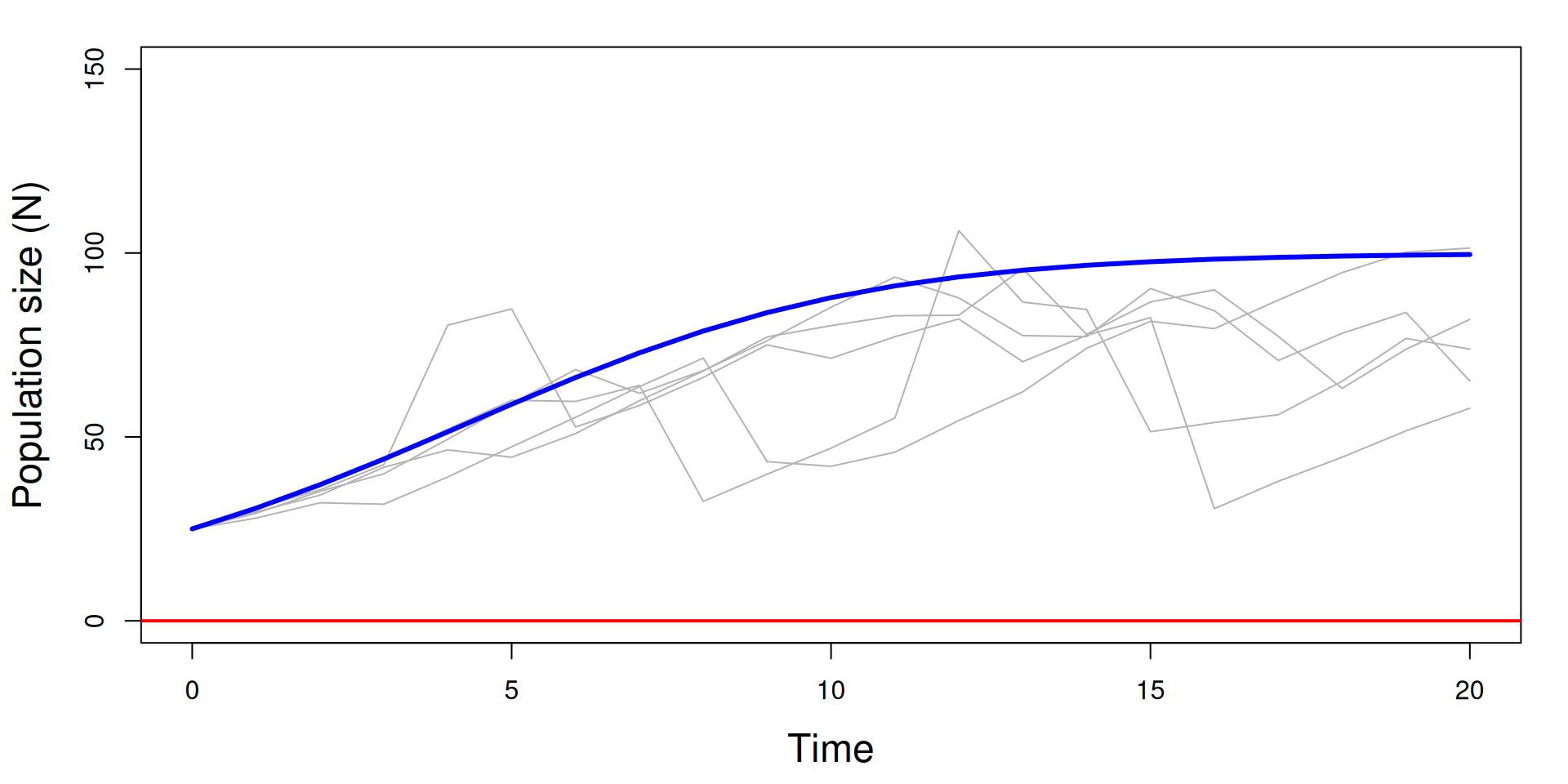
Logistic growth with stochastic carrying capacity

\[ N_{t+1} = N_t + N_tr_{max}(1 - N_t/K_t) \]

where

\[ K_t \sim \mbox{Normal}(\bar{K}, \sigma^2) \]

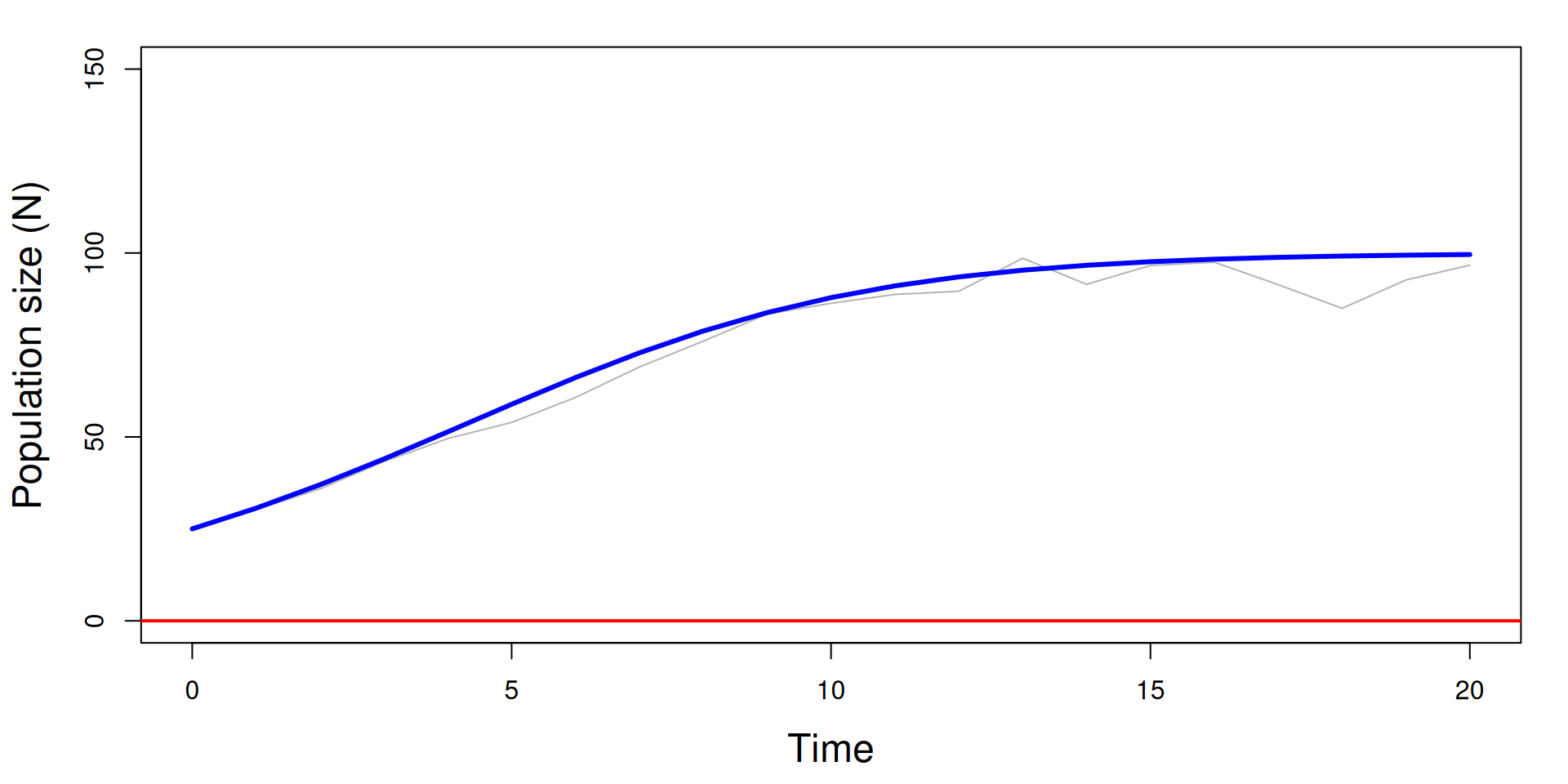
Logistic example

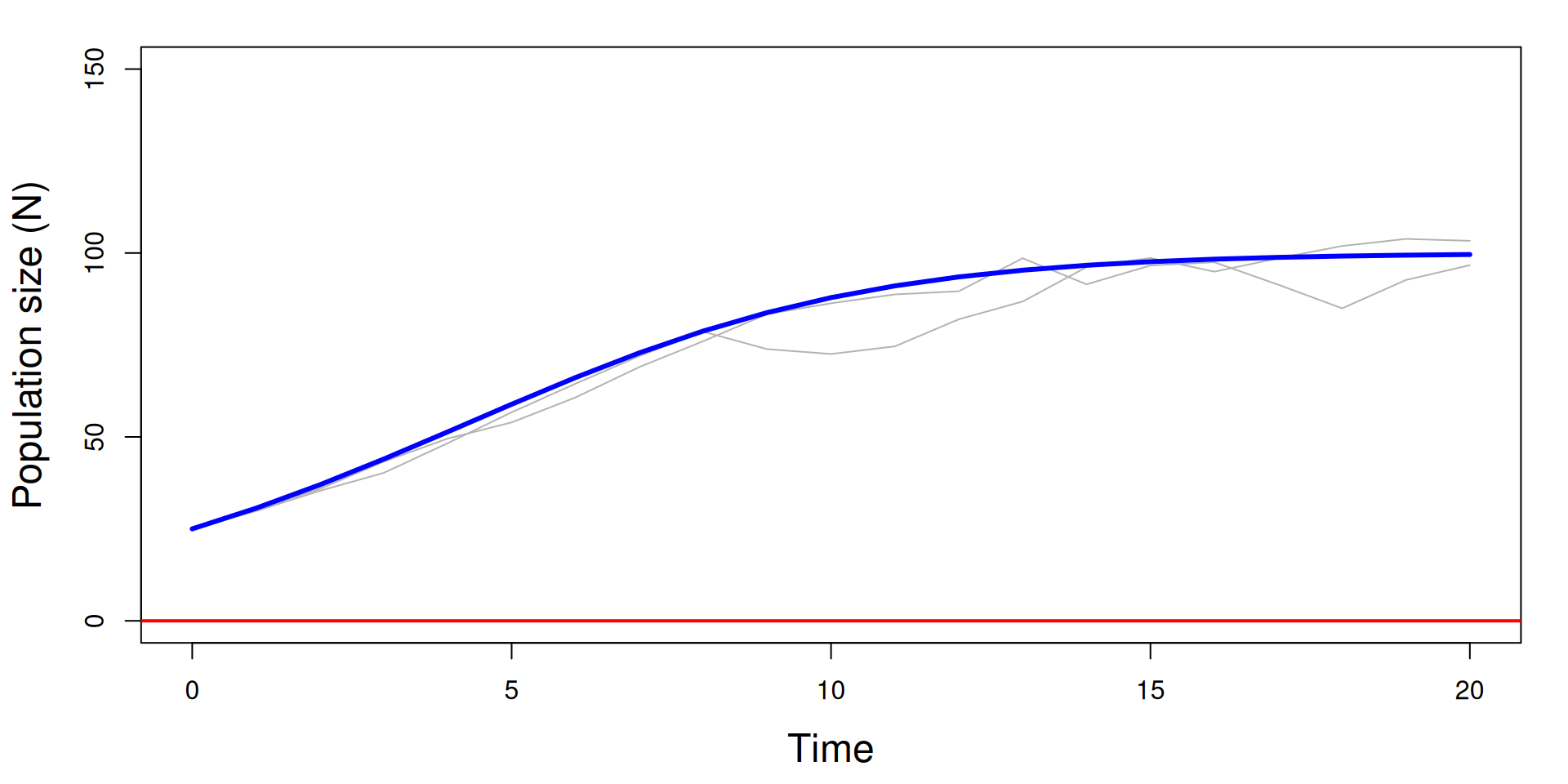
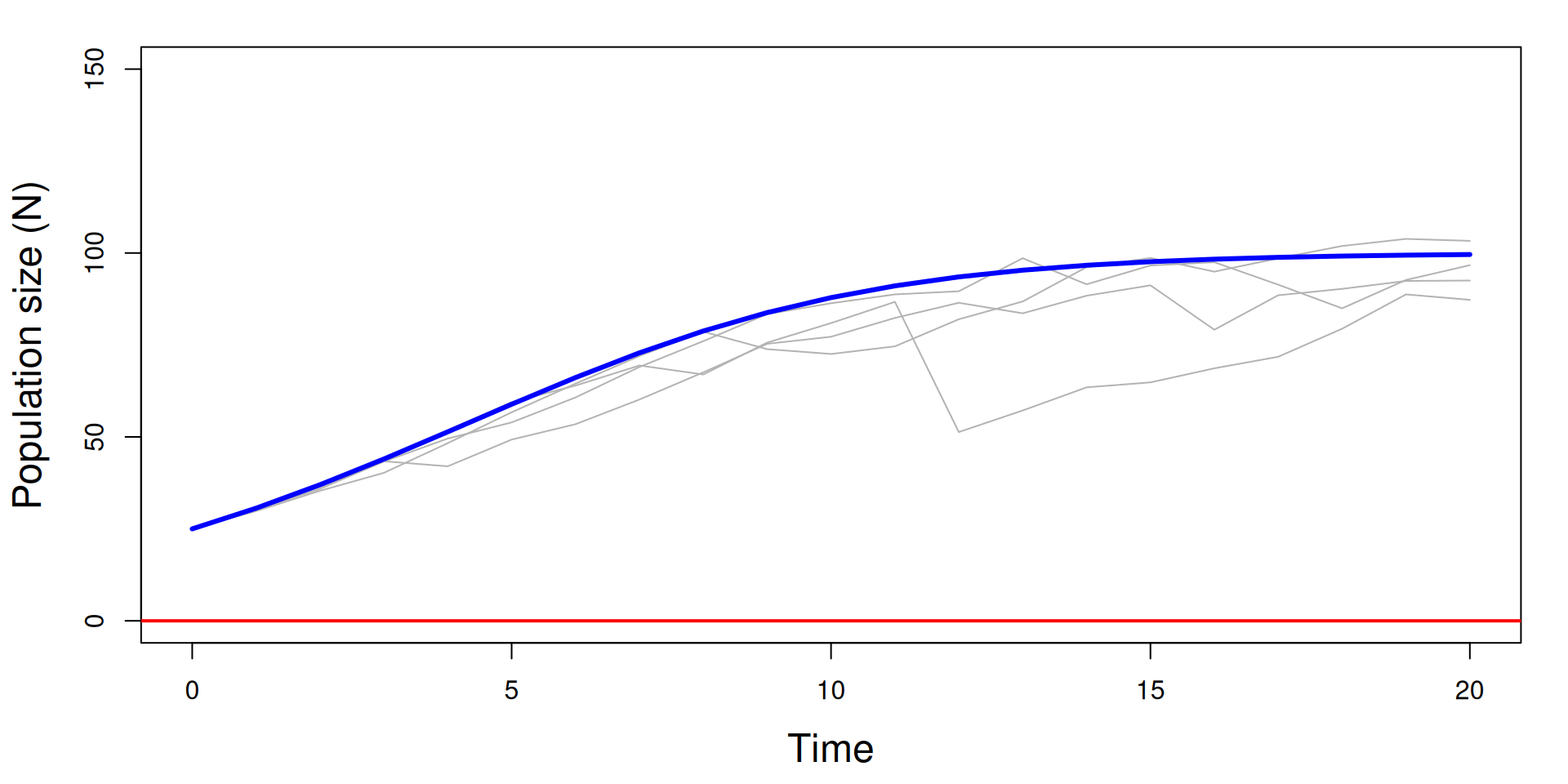
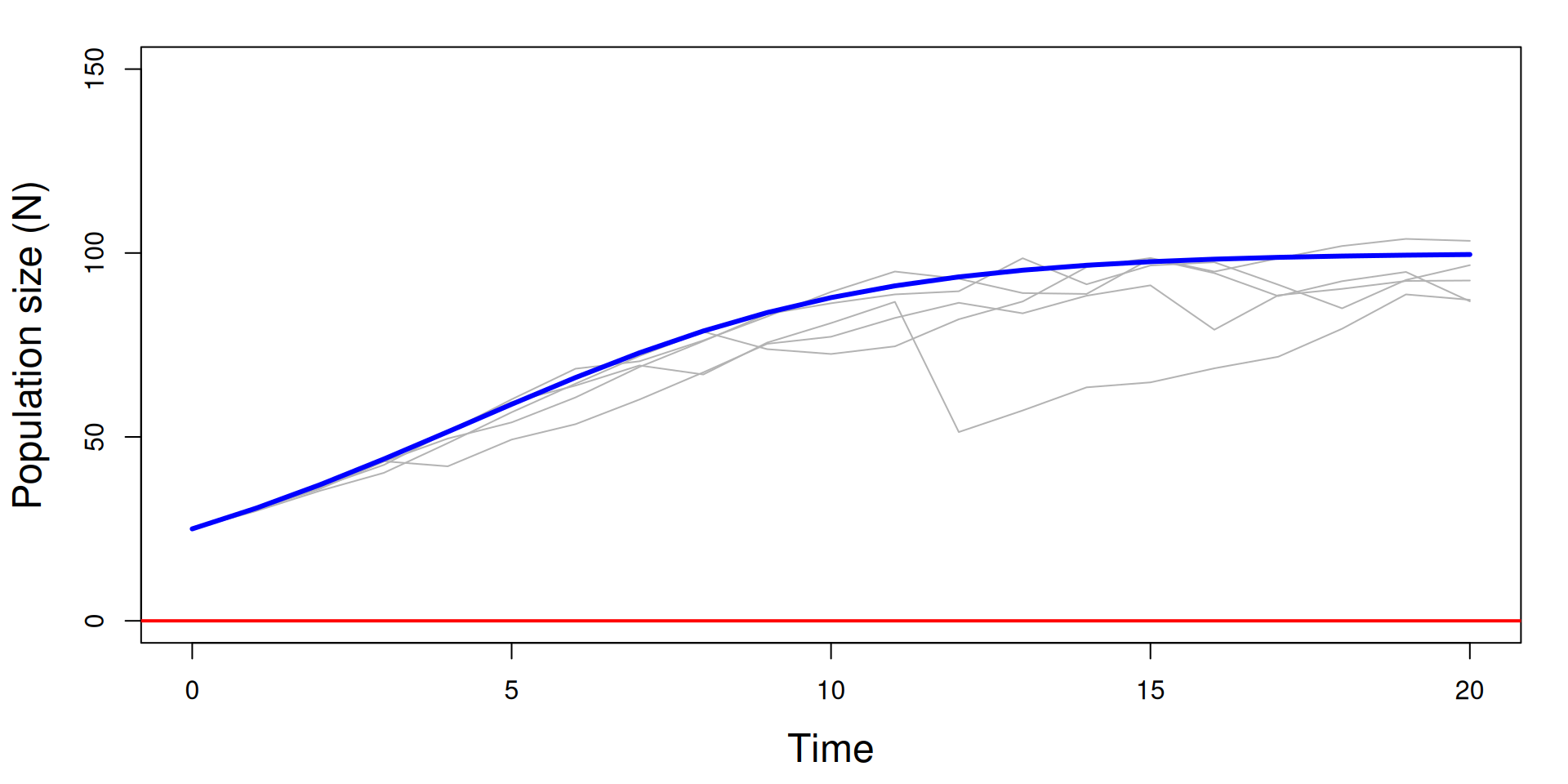
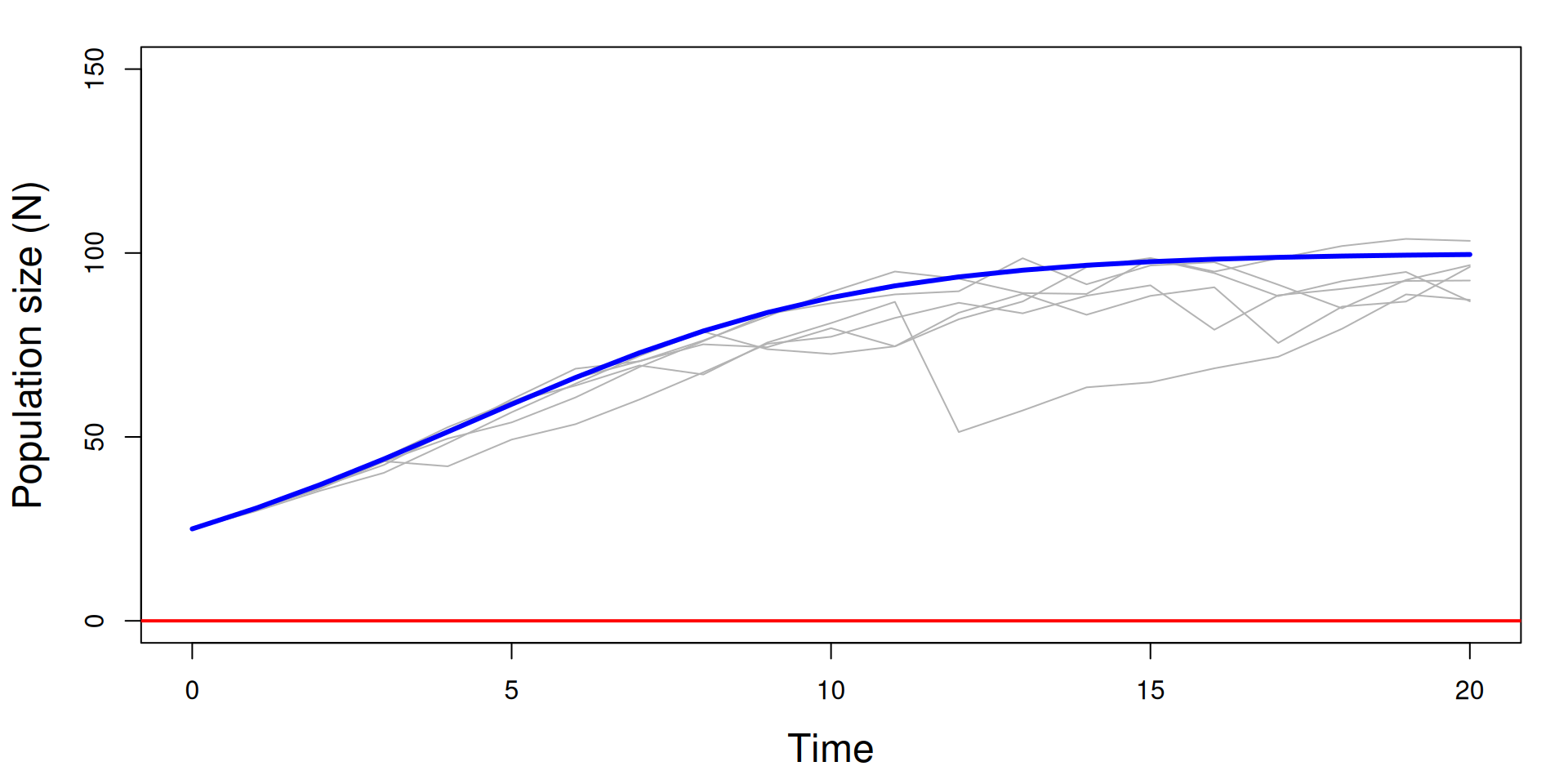
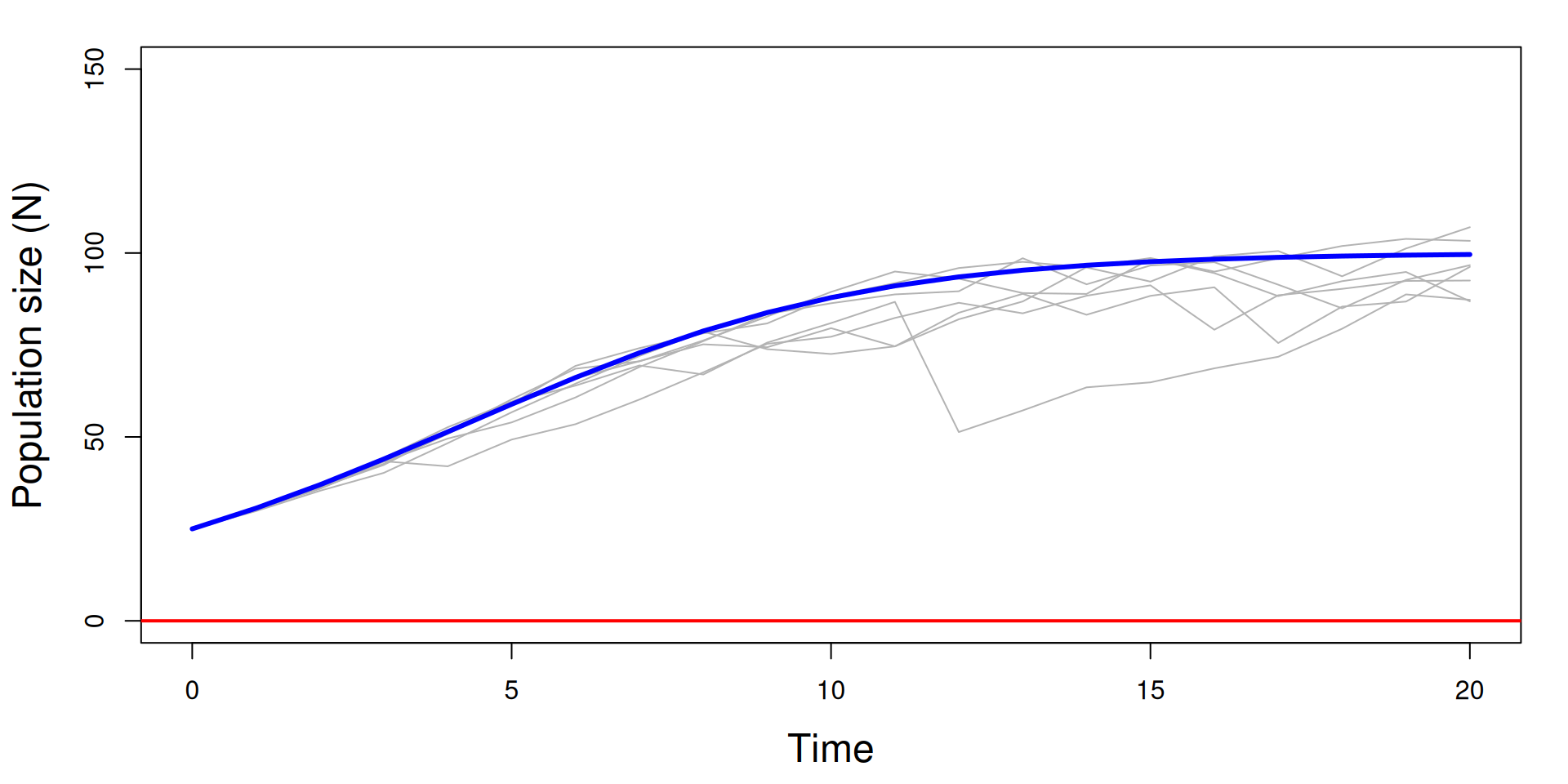
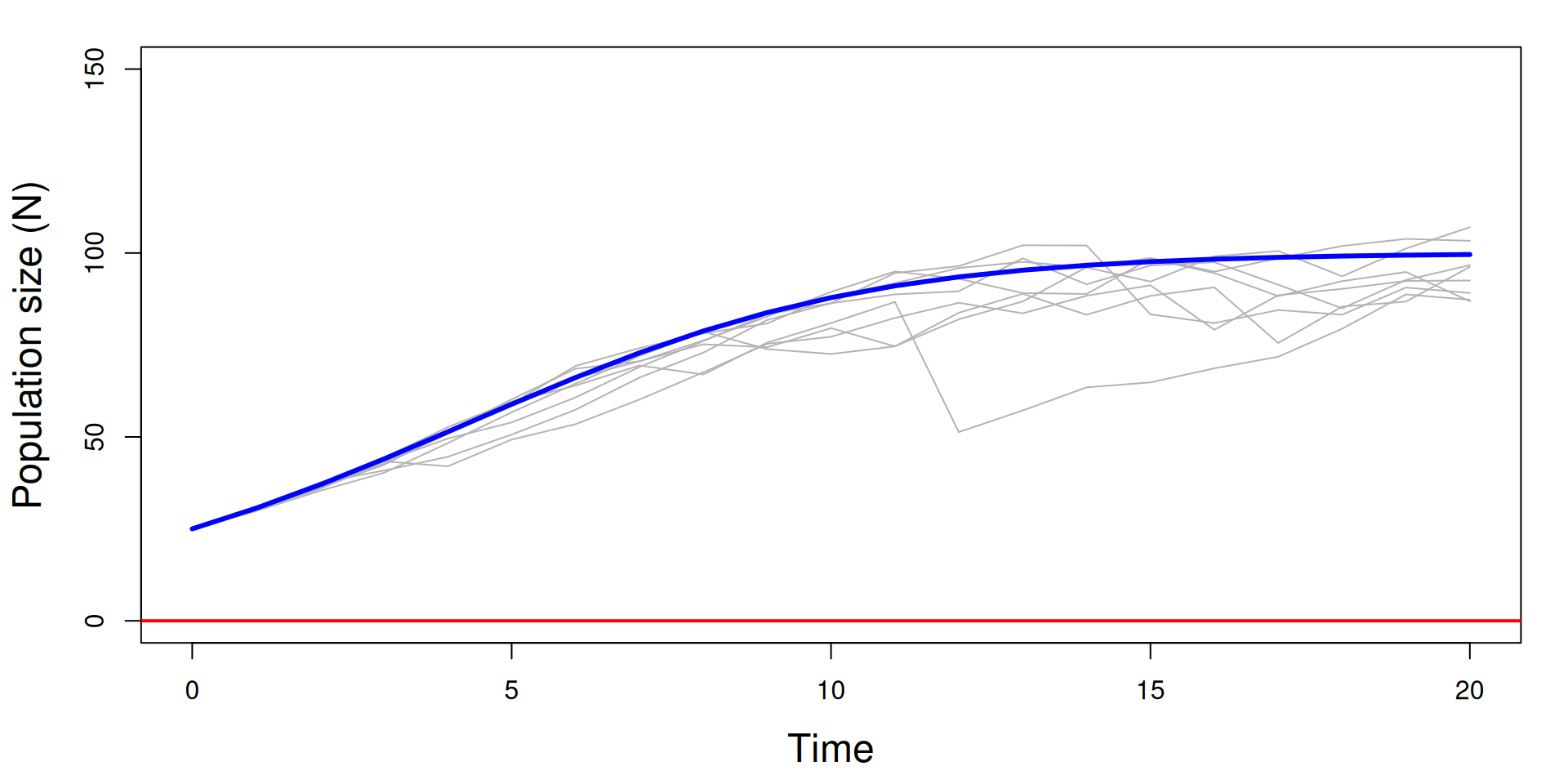
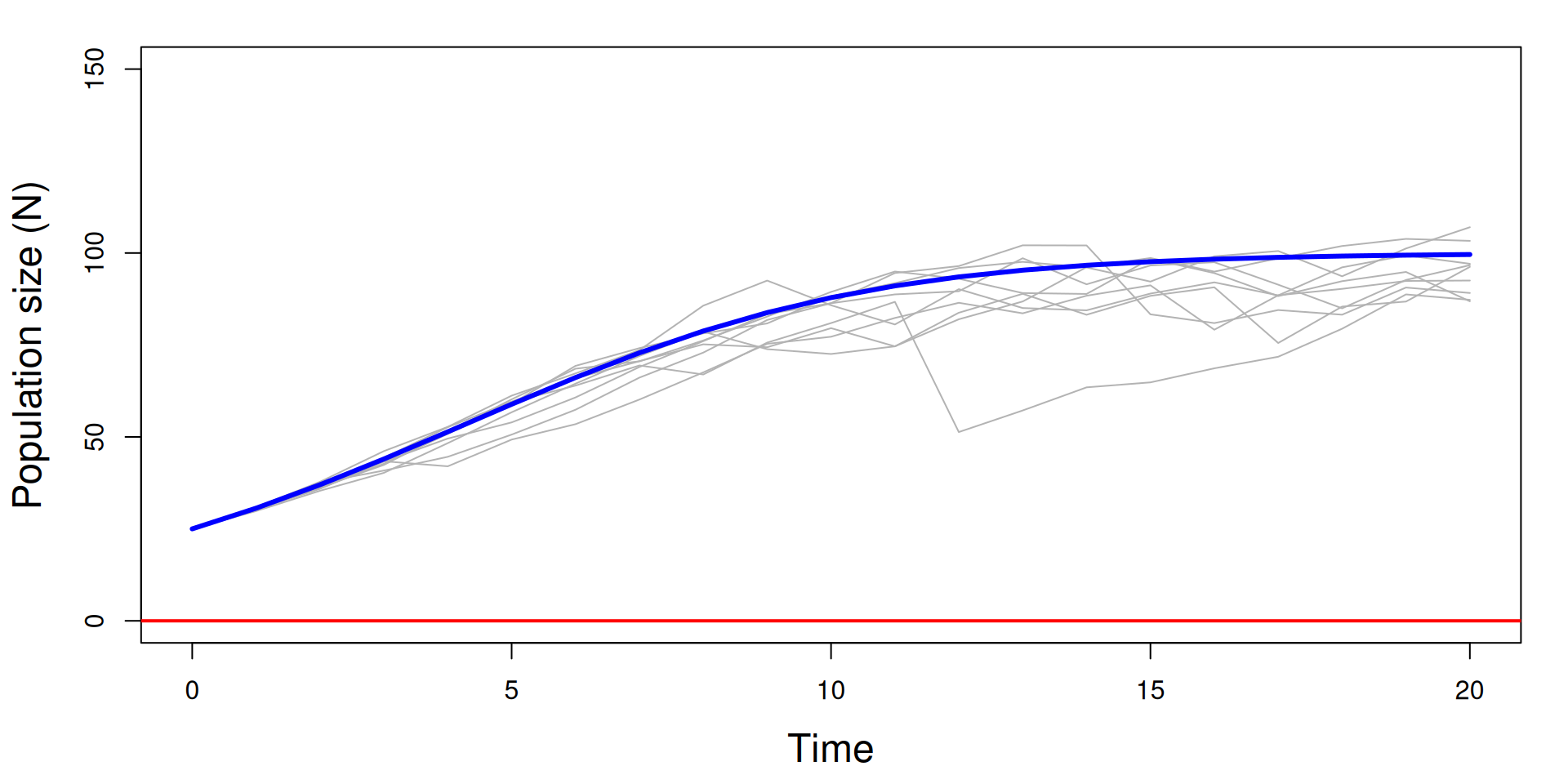
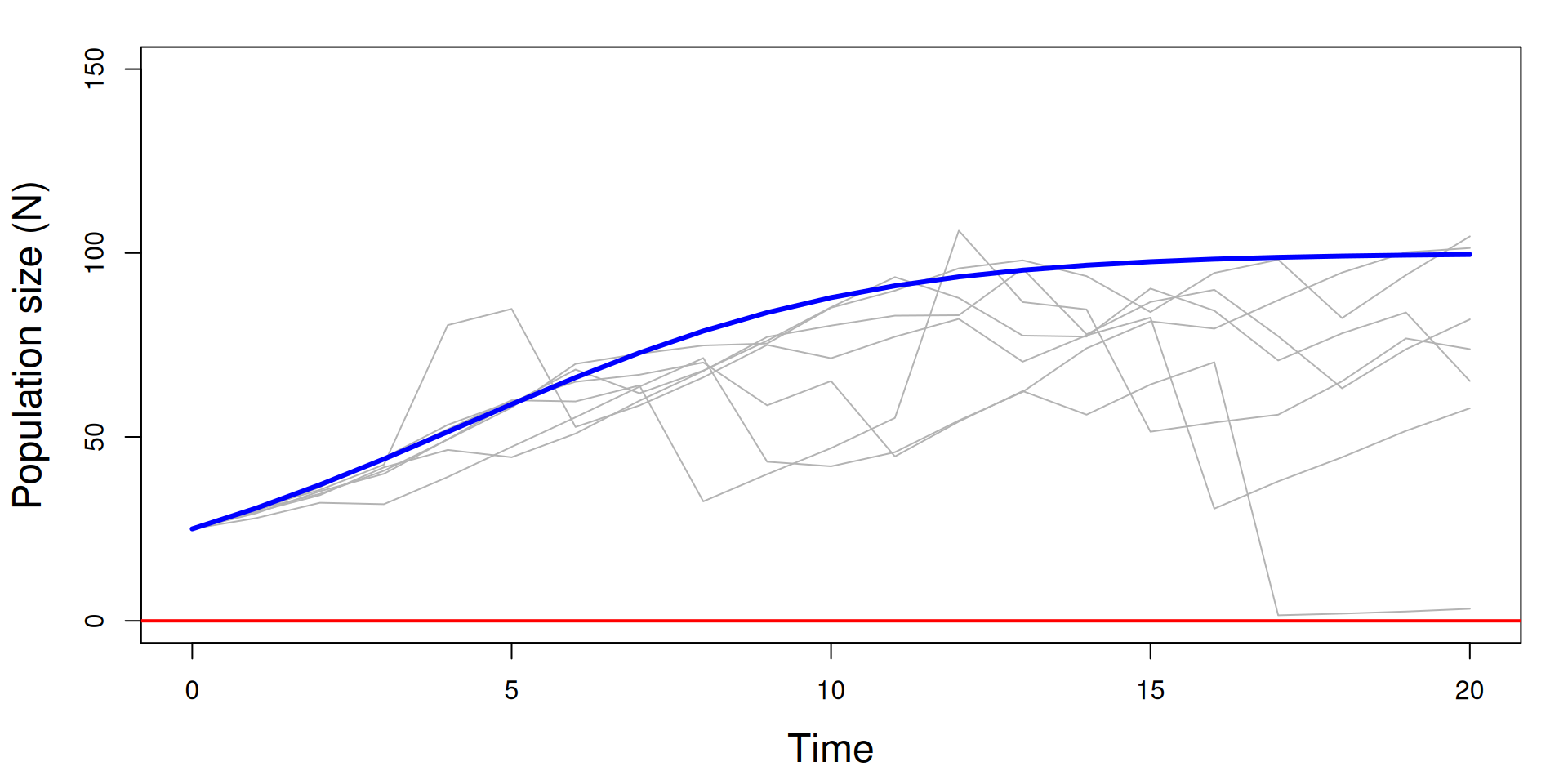
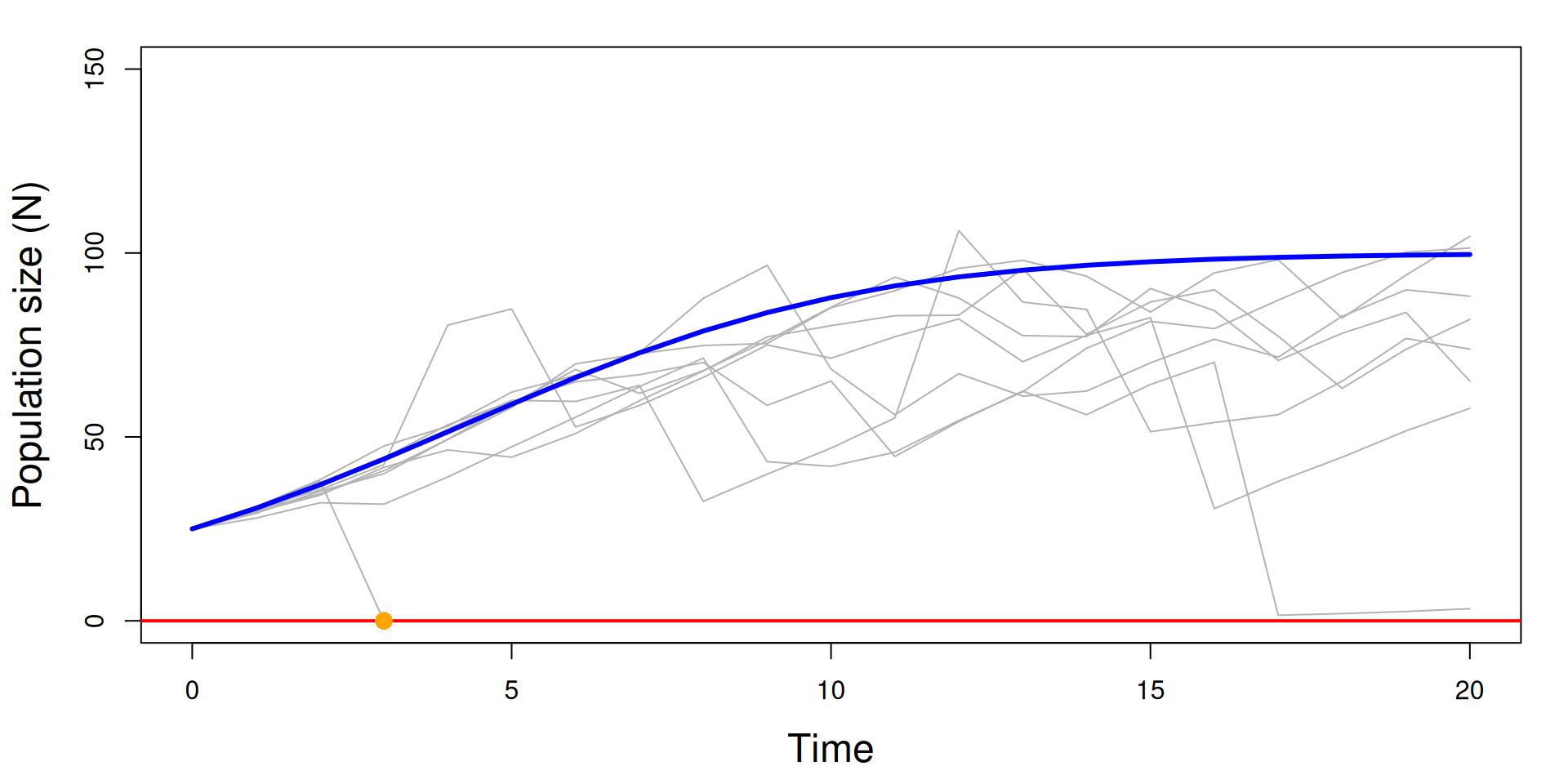
\[ N_{t+1} = N_t + N_t 0.3(1 - N_t/K_t) \\ K_t \sim \mbox{Normal}(\bar{K}=100, \sigma^2=400) \]
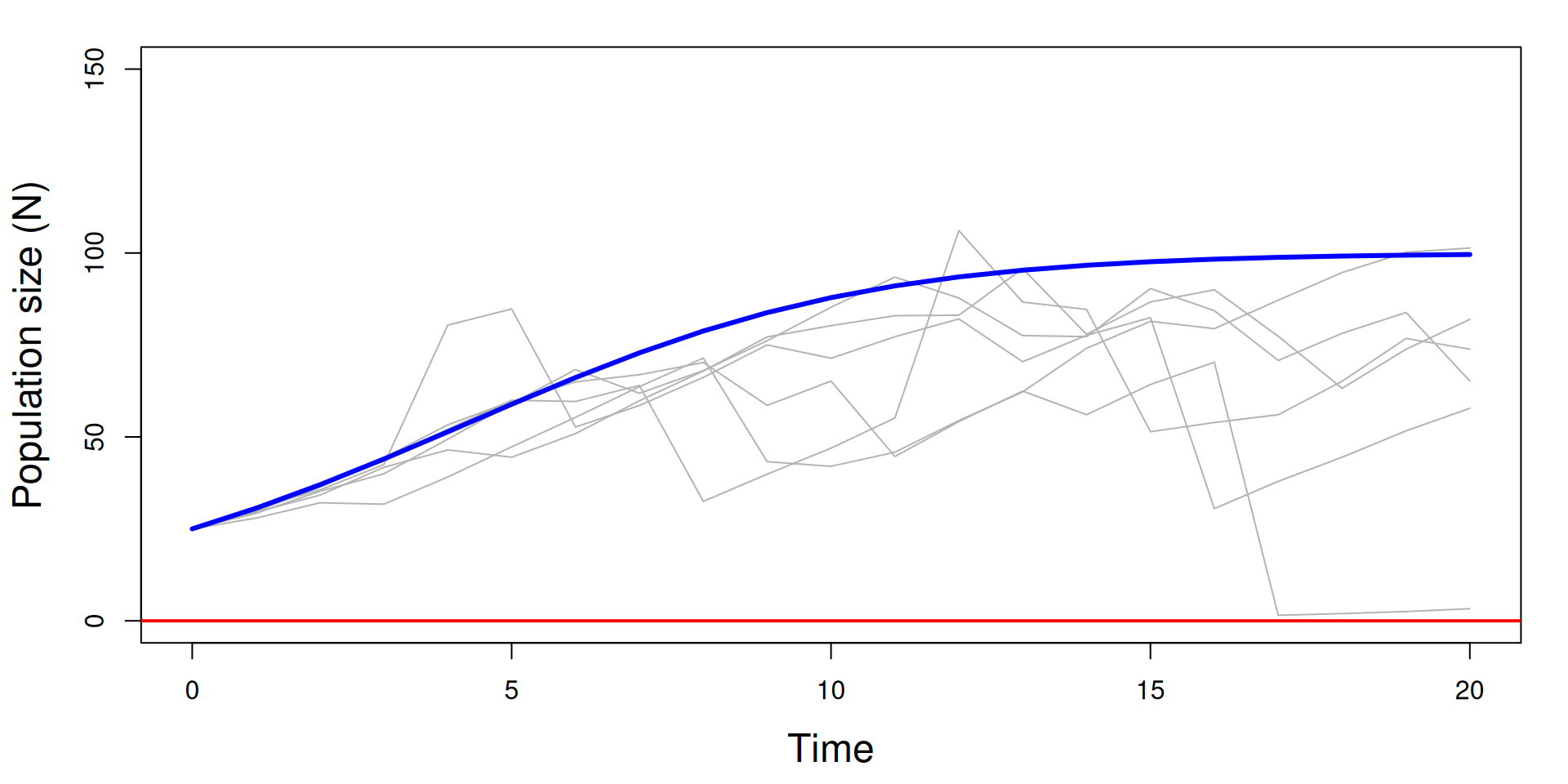
Extinction risk

Zero extinctions in 100 simulations, hence extinction risk is (approximately) zero over the 20 year time horizon.


Assumptions:

  • We have the correct model
  • We know the parameters with certainty

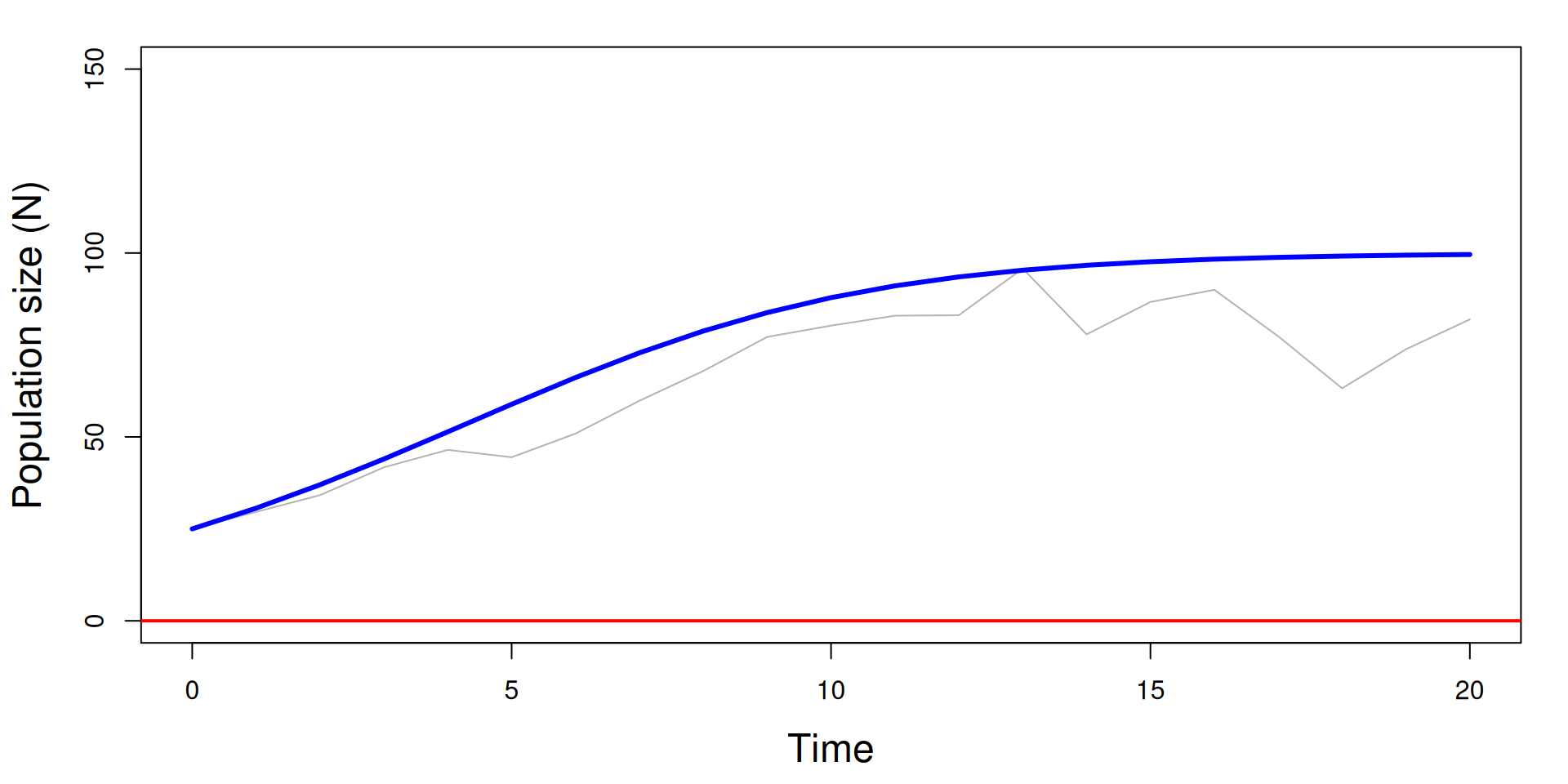
Logistic example

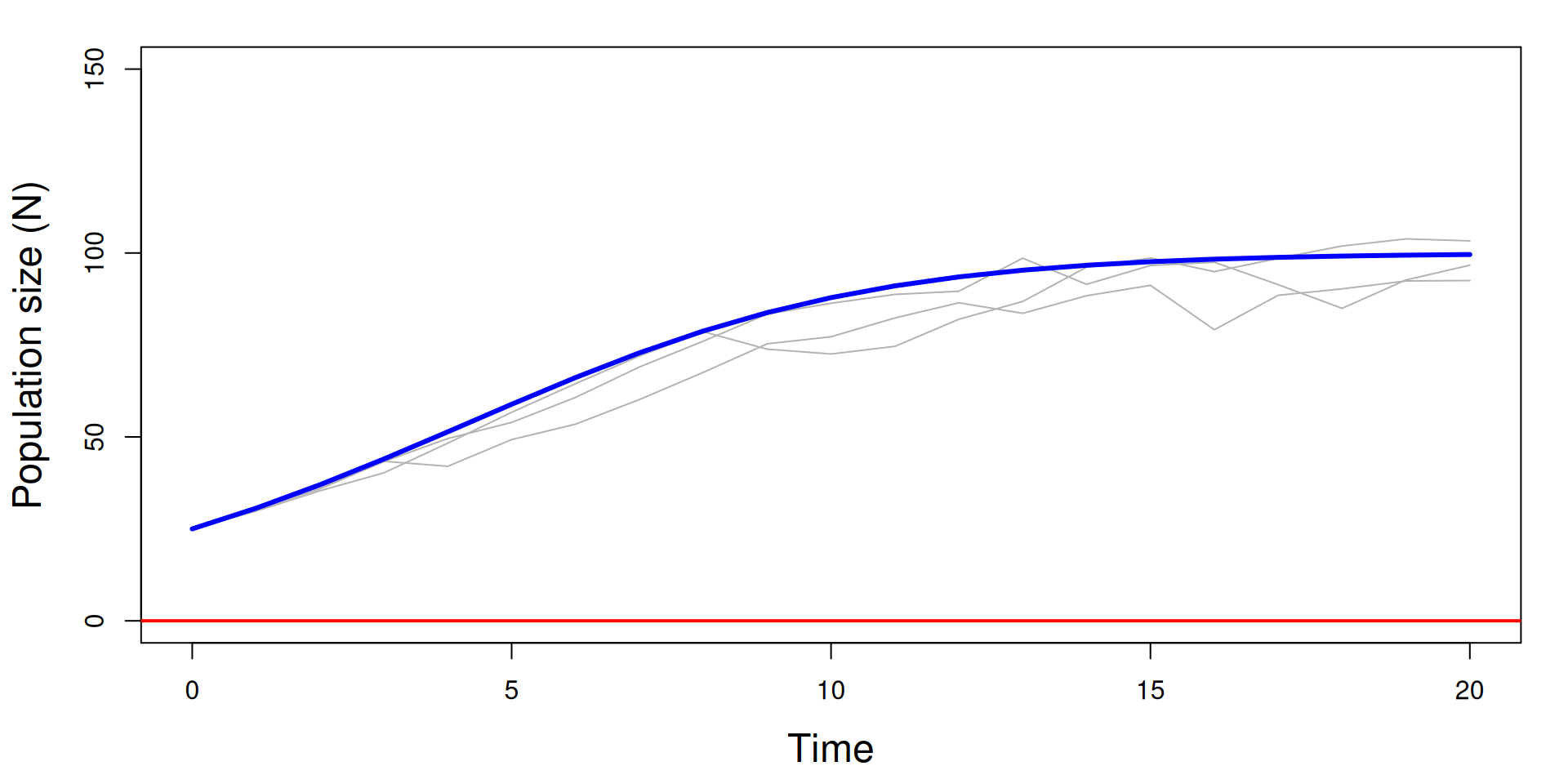
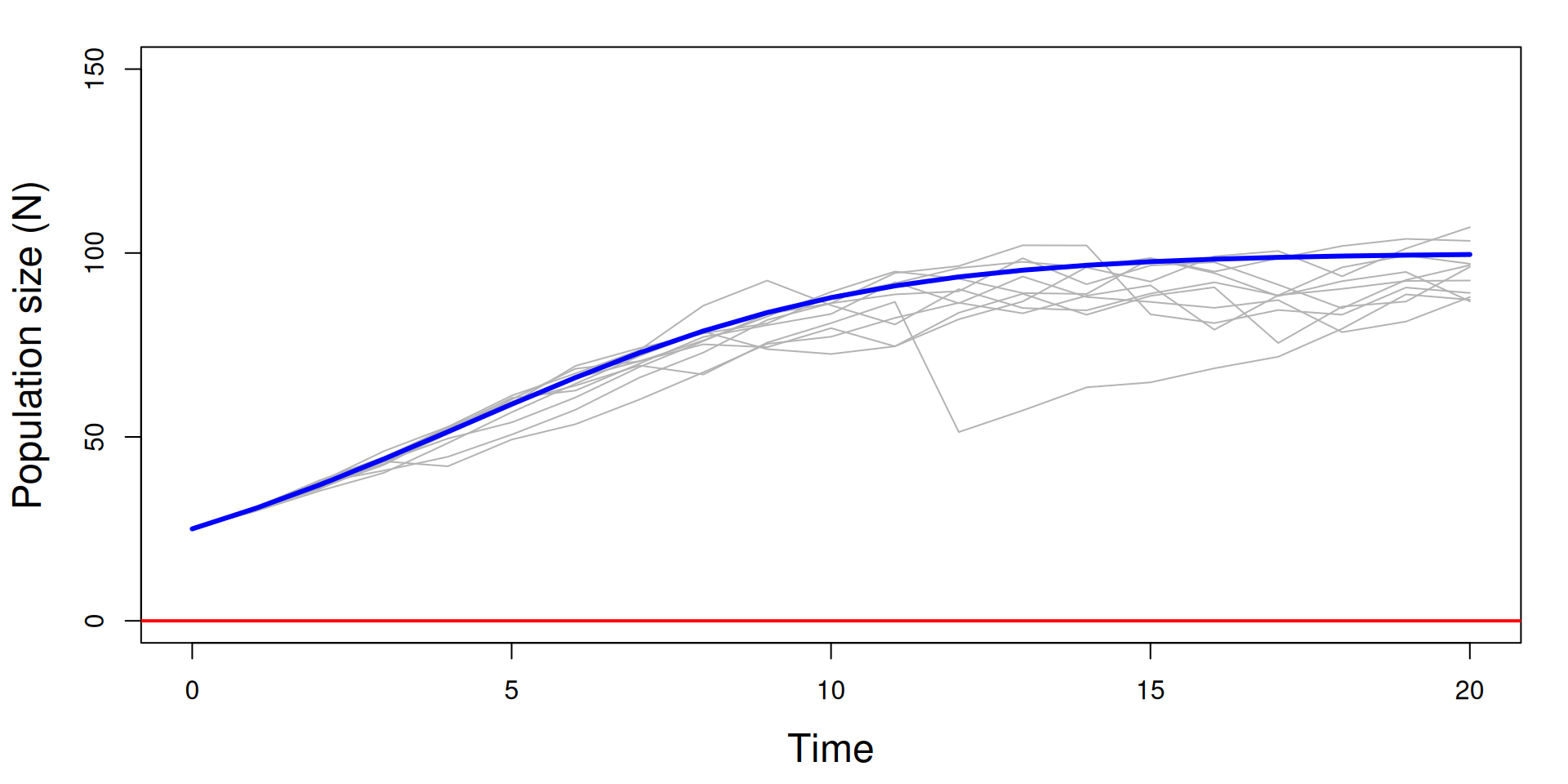
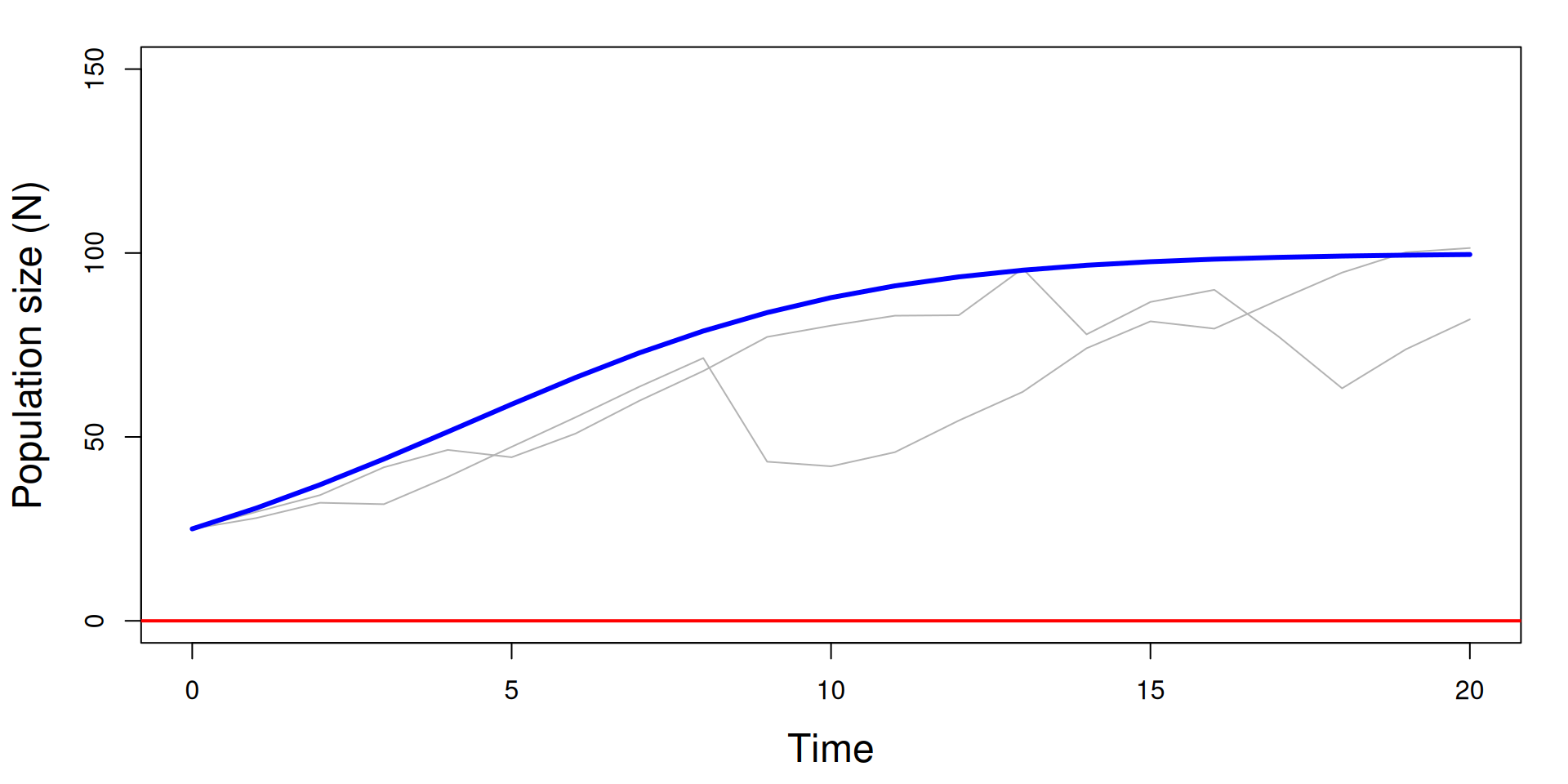
\[ N_{t+1} = N_t + N_t 0.3(1 - N_t/K_t) \\ K_t \sim \mbox{Normal}(\bar{K}=100, \sigma^2=1600) \]
Allee effects
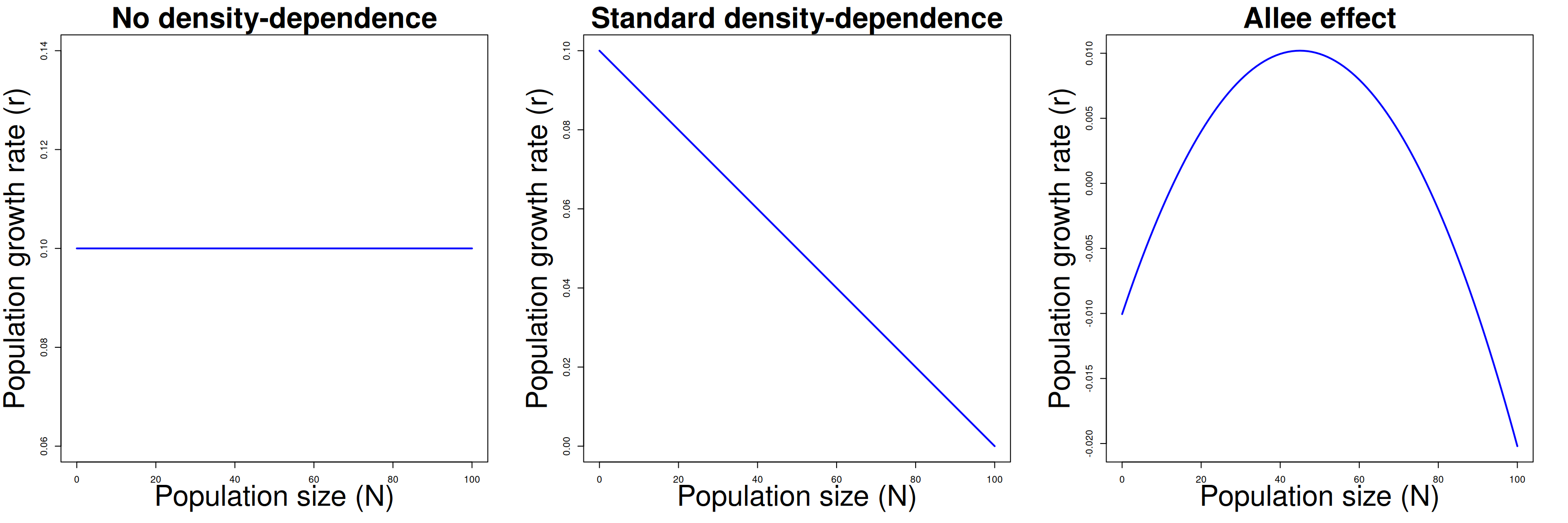
Normally, population growth rates increase as the population decreases (negative correlation).


The Allee effect is the phenomenon of positive correlation between population growth rates and population size.


Possible mechanisms:

  • Finding a mate becomes difficult
  • Social systems collapse
  • Inbreeding depression

Allee effects can greatly increase extinction risk for small populations

Allee effects


Summary


Humans have increased extinction rates dramatically.


Models let us predict time-to-extinction and extinction risk.


Models can be used to assess effects of management actions on extinction risk.


Assignment

Read pages 27–31 in Conroy and Carroll.