Models of interspecific interactions
Predator-prey dynamics and competition
Introduction
Lotka and Volterra developed models for both predator-prey dynamics and competitive interactions.
As usual, these models were developed as continuous-time models.
We will focus on discrete-time versions (\(t = 1, 2, \ldots\)).
We will ignore potential extensions with stochasticity, age structure, spatial structure, etc…
Predator-Prey dynamics
How should predator-prey dynamics operate?
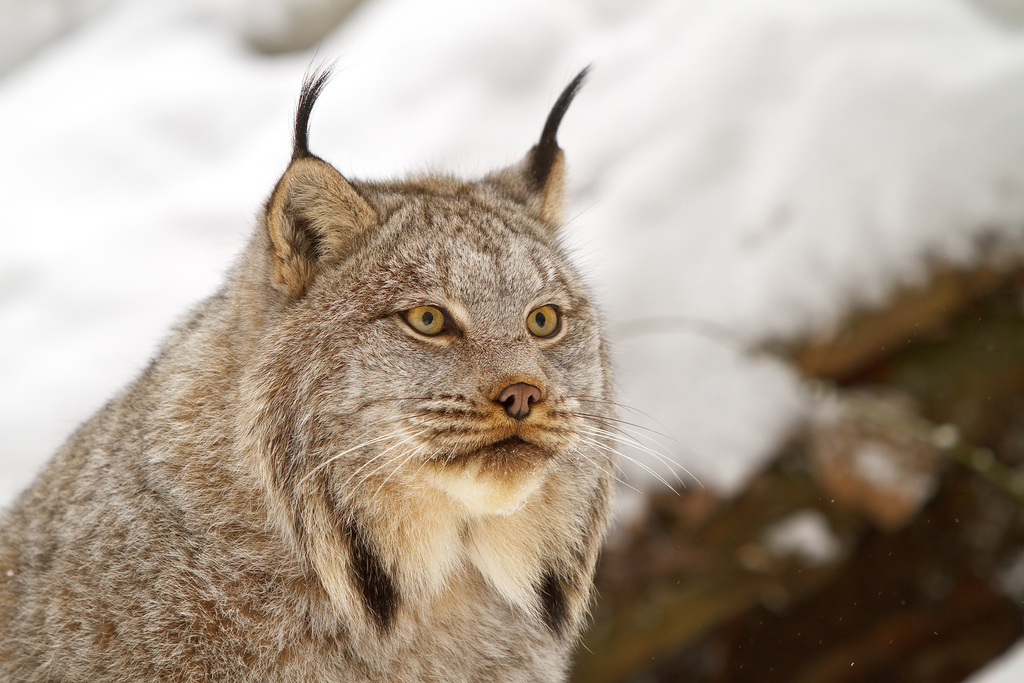
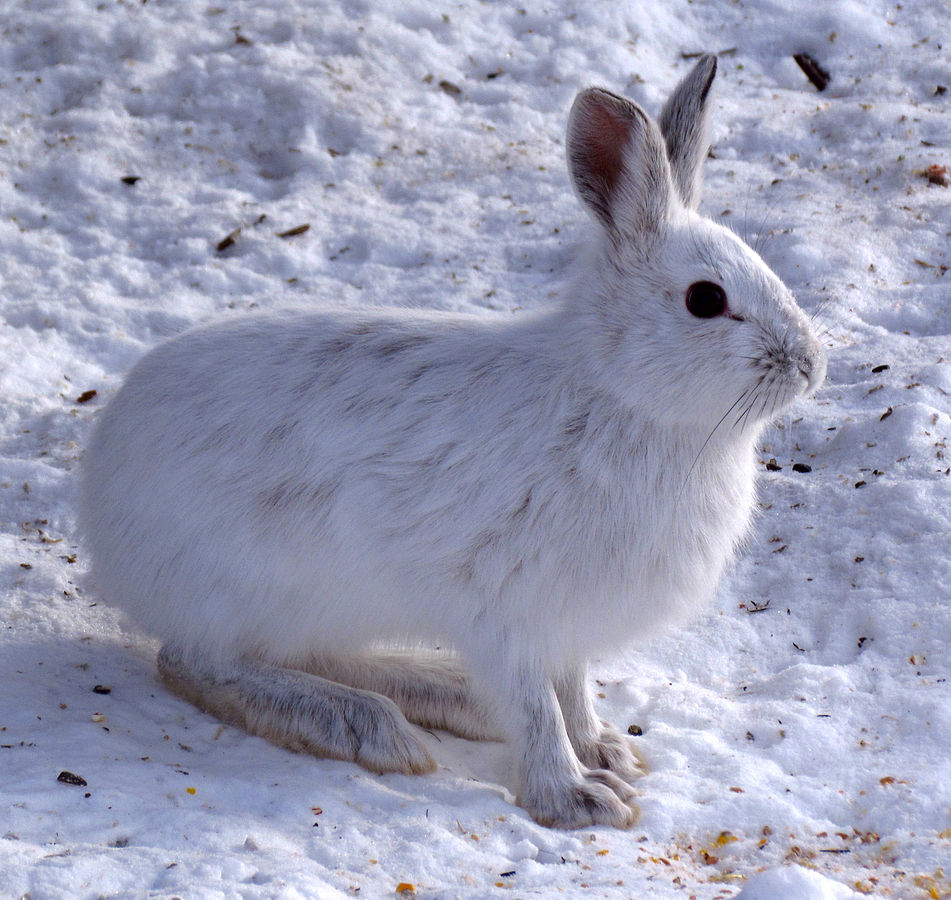
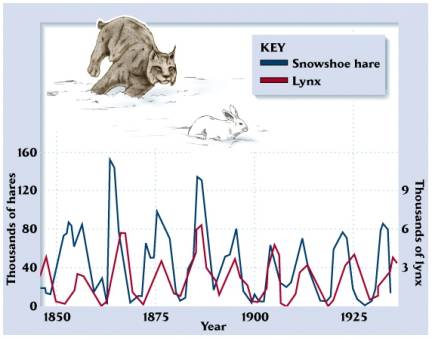
Lynx-hare cycles
Lotka-Volterra predator-prey model
Model for prey \[ N^{prey}_{t+1} = N^{prey}_t + N^{prey}_t (r^{prey} - k^{pred} N^{pred}_t) \]
Model for predator \[ N^{pred}_{t+1} = N^{pred}_t + N^{pred}_t (b^{pred}N^{prey}_t - d^{pred}) \]
- Model is based on geometric growth
- \(r^{prey}\): growth rate of the prey in the absence of predators
- \(k^{pred}\): kill rate
- \(b^{pred}\): effect of prey on predator birth rate
- \(d^{pred}\): predator mortality rate
Equilibrium
Equilibrium for prey occurs when: \[ N^{pred} = \frac{r^{prey}}{k^{pred}} \]
Equilibrium for predators occurs when \[ N^{prey} = \frac{d^{pred}}{b^{pred}} \]
However, it is rare that both equilibrium conditions will be met at the same time, and so the populations will cycle.
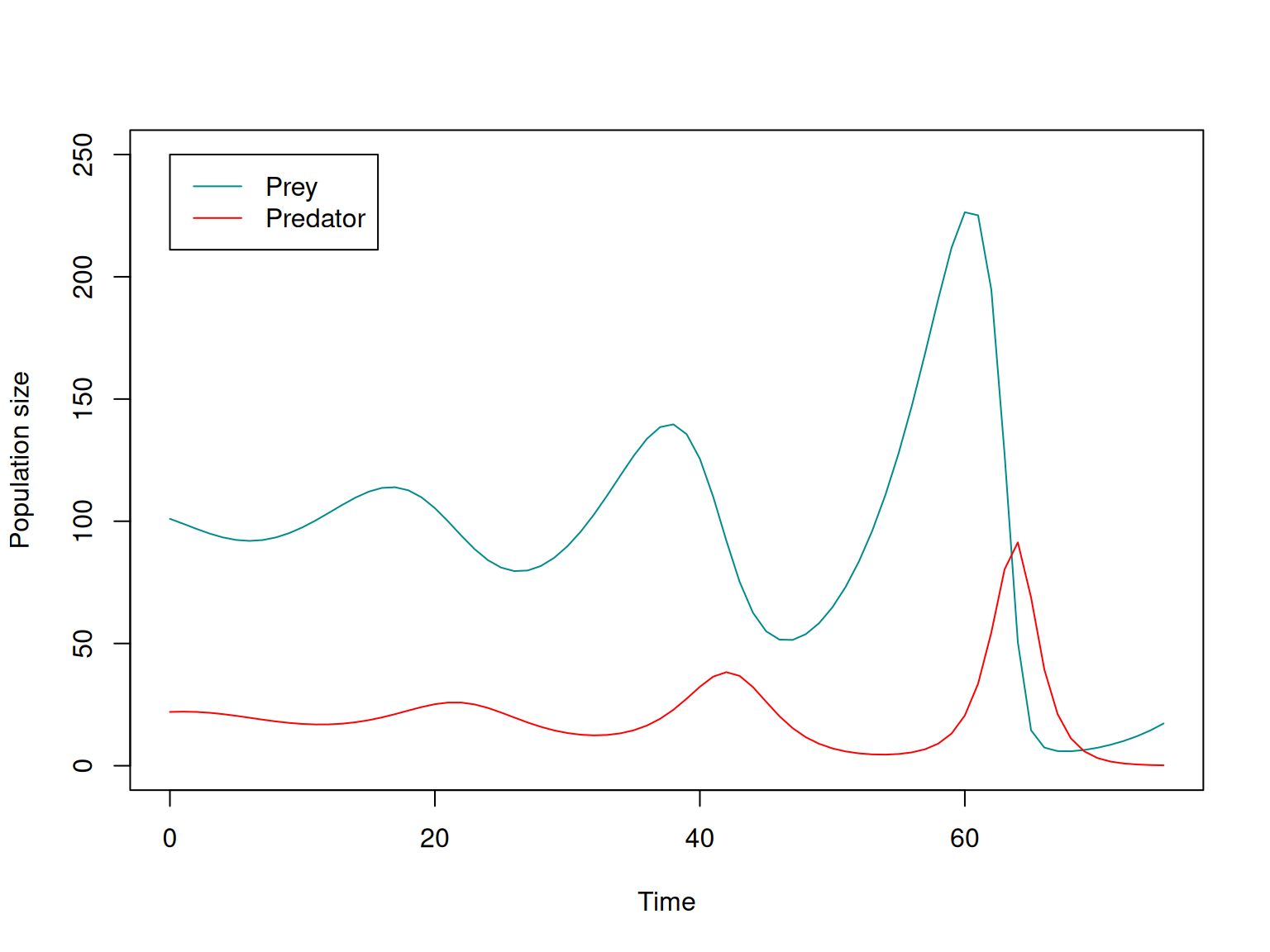
Model predicts population cycles
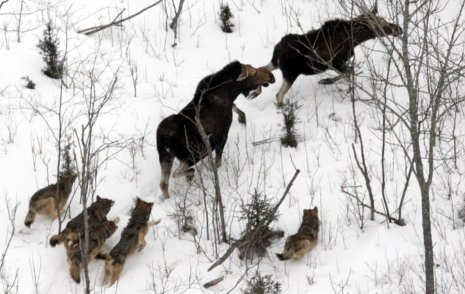
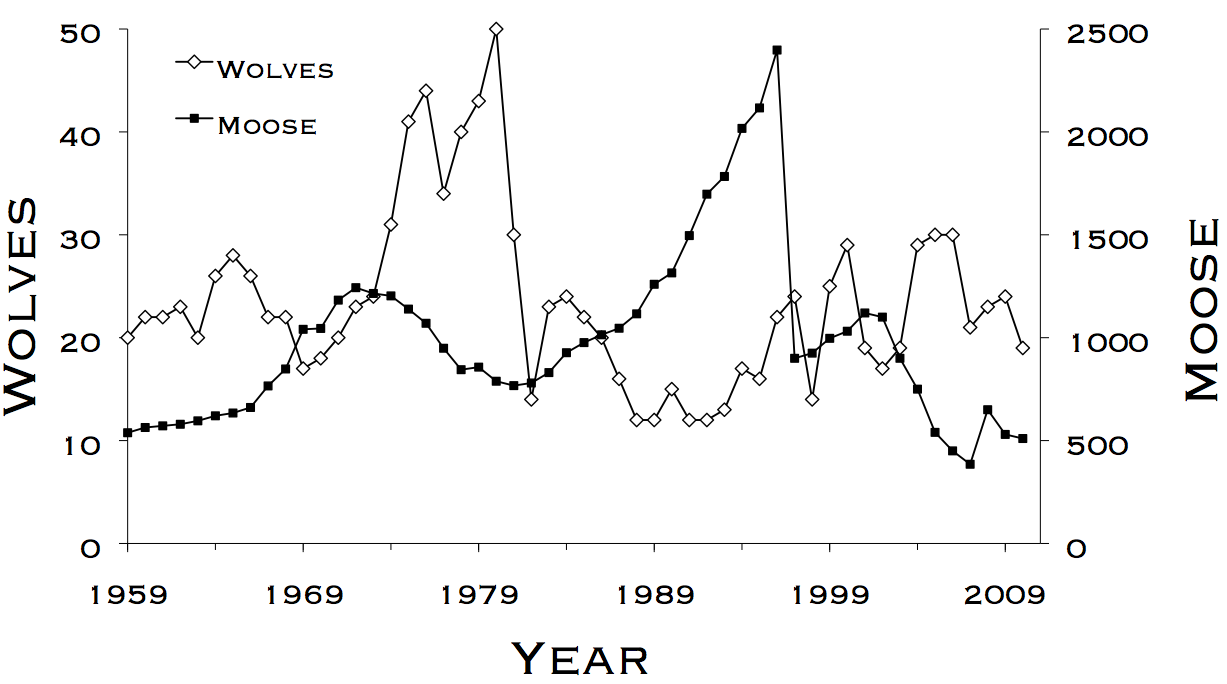
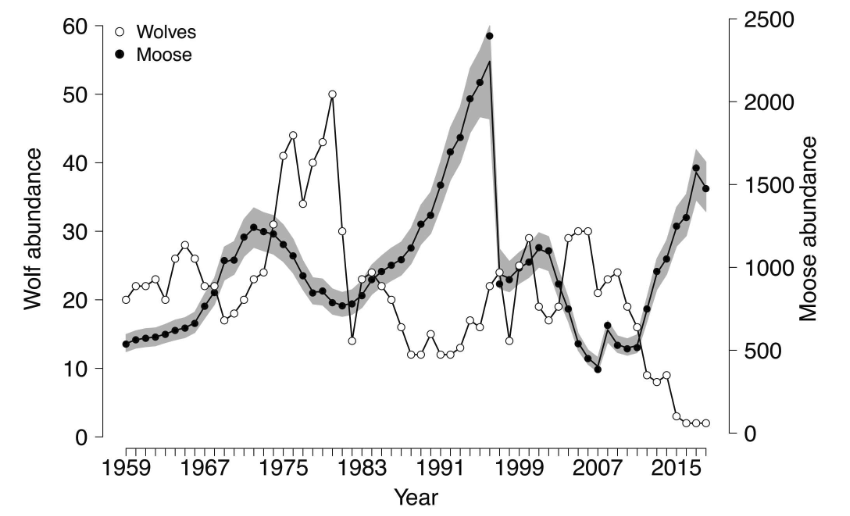
Isle Royale wolves and moose
Huffaker’s Lab Experiments
Competition
Competition
Lotka-Volterra competition model
Model for species A \[ N^A_{t+1} = N^A_t + r^A N^A_t(K^A - N^A_t - \alpha^B N^B_t) / K^A \]
Model for species B \[ N^B_{t+1} = N^B_t + r^B N^B_t(K^B - N^B_t - \alpha^A N^A_t) / K^B \]
- Model based on logistic growth
- The \(\alpha\) parameters are competition coefficients determining how strongly each species affects the other
Equilibrium
Equilibrium for species A \[ N^A = \frac{K^A - \alpha^B K^B}{1 - \alpha^A \alpha^B} \]
Equilibrium for species B \[ N^B = \frac{K^B - \alpha^A K^A}{1 - \alpha^A \alpha^B} \]
Outcomes
Three posssible outcomes:
- Stable coexistence
- Competitive exclusion
- Unstable equilibrium
Competitive exclusion principle Two species with the same niche cannot coexist on the same limiting resource.
Outcomes
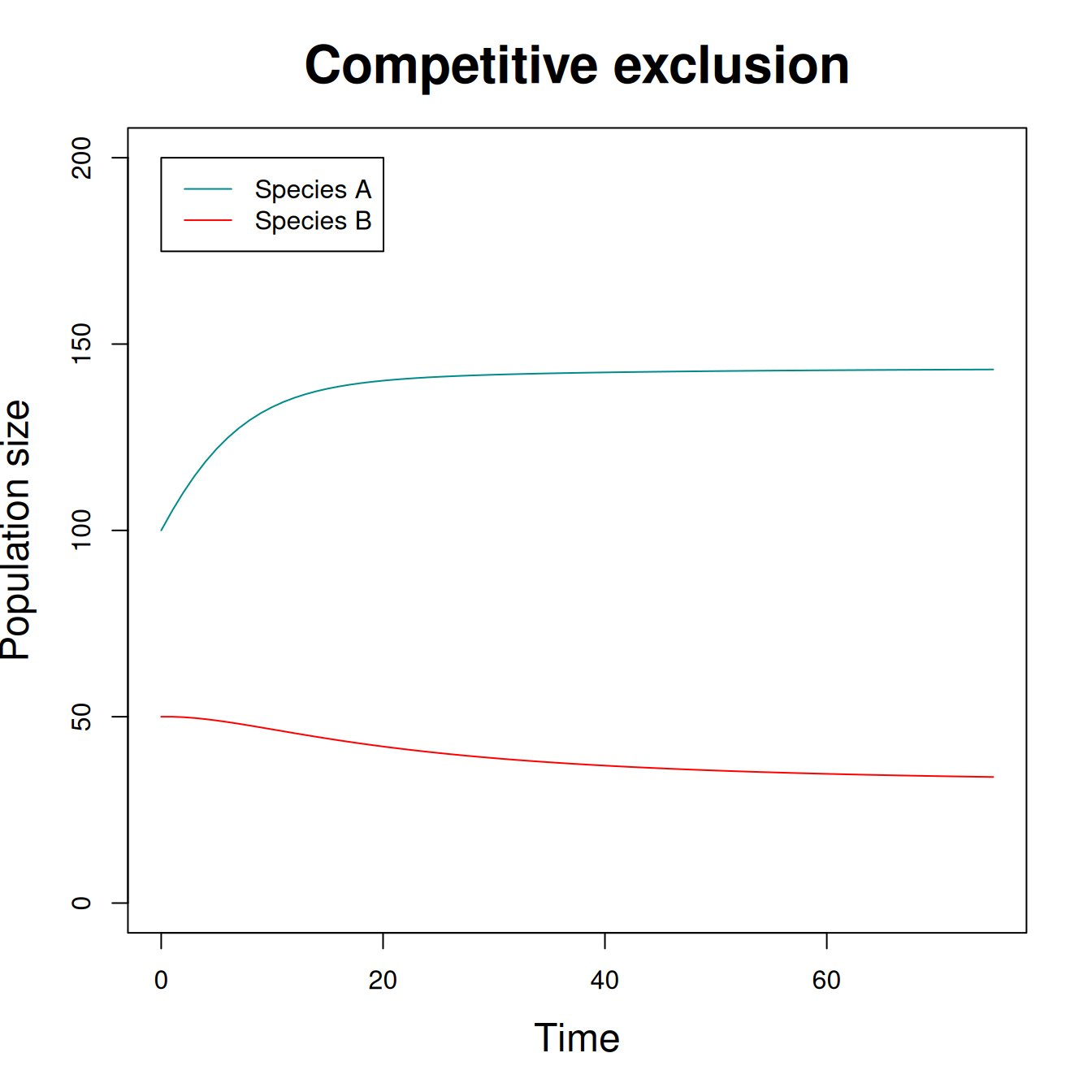
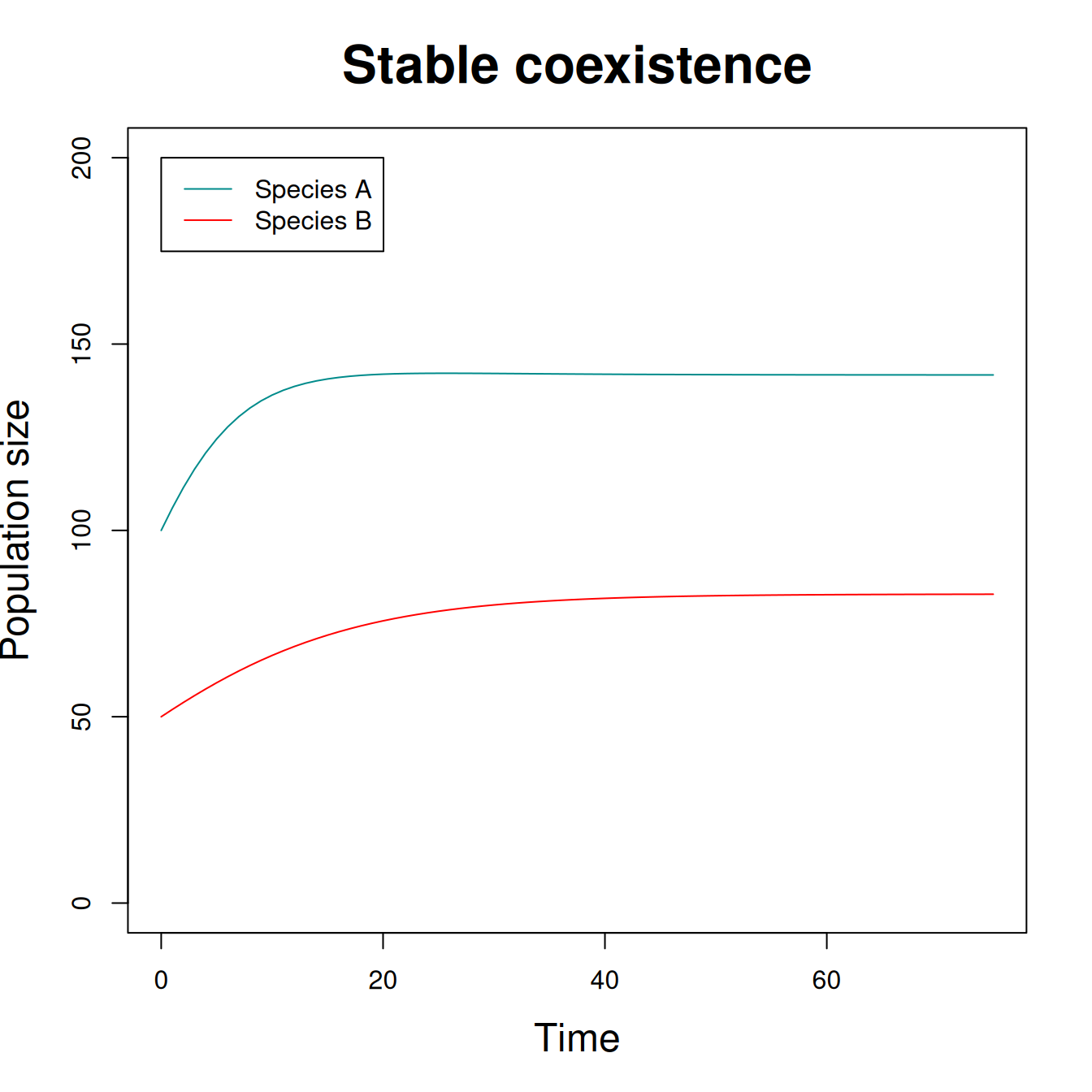
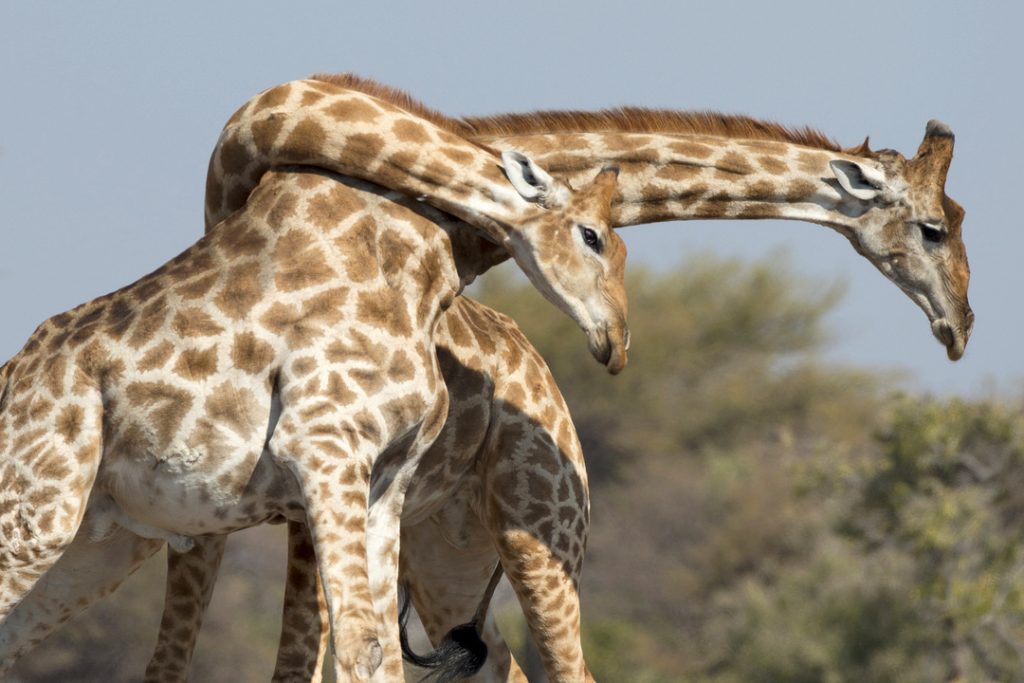
Don’t forget about intraspecific competition
Summary
Predator-prey model is extension of geometric growth
- Predators and prey limit each other’s growth potential
Competition model is extension of logistic growth
- Competitors influence each other’s density-dependent regulation process
These models could be extended to include:
- More species
- Stochasticity
- Age structure
- Harvest
- Spatial structure
- Additional forms of density dependence